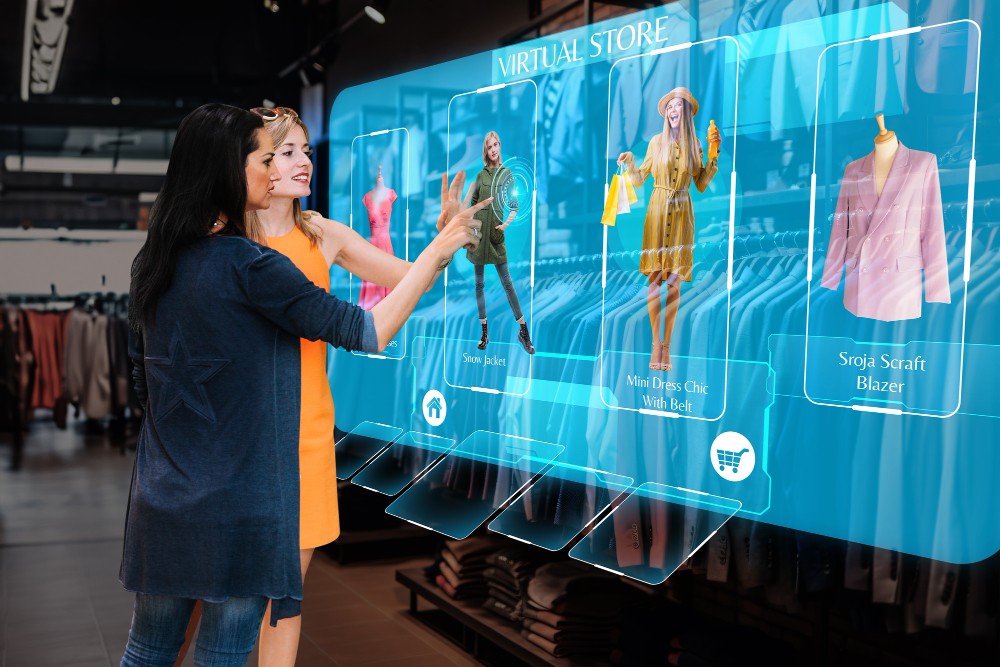
Augmented Reality (AR) has evolved from a niche experimental technology into a critical competitive advantage in e-commerce, fundamentally reshaping how consumers discover, evaluate, and purchase products. In 2026, AR is not merely a “nice-to-have” feature but an essential component of modern retail strategies that directly impacts conversion rates, customer satisfaction, and return management.
Market Growth and Adoption Trajectory
The AR in e-commerce market is experiencing explosive growth. The global AR e-commerce market was valued at approximately USD 5.9 billion in 2024 and is projected to reach USD 8.3 billion by 2025, with expectations to climb to USD 38.5 billion by 2030, representing a compound annual growth rate (CAGR) of 35.8% from 2025 to 2030. This represents one of the fastest-growing segments within the broader e-commerce and retail technology landscape.
Mobile AR accessibility is particularly significant, with an estimated 1.73 billion augmented reality users on mobile devices by 2025. Consumer adoption is accelerating as well, with approximately one-third of US shoppers expected to use AR technology for online purchases in 2025, while adoption rates in regions like Saudi Arabia and the United Arab Emirates reach nearly 45%.
Core Business Benefits Driving Implementation
Return Rate Reduction
One of the most compelling reasons retailers are prioritizing AR implementation is its dramatic impact on product returns. Multiple studies document substantial improvements:
The effectiveness of AR in reducing returns varies by implementation type. Shopify reports a 40% decrease in returns from 3D visualization, while SeekXR documents a 25% decrease in returns from AR-guided purchases. Build.com achieved a 22% lower return rate for shoppers using AR product visualization. These reductions are particularly valuable for retailers operating on thin margins, where return costs significantly impact profitability.
In the furniture sector, where returns typically hit 28% due to size or style mismatches, AR visualization is proving transformative by helping buyers make more informed decisions before purchase.
Conversion Rate Improvements
AR experiences demonstrate remarkable engagement and conversion metrics. Users shopping with AR features show a 112% higher conversion rate and experience a 30% reduction in returns. In specific implementations, the impact is even more dramatic: virtual try-on experiences boost sales by 20% while simultaneously cutting returns by 30%.
Beyond conversion rates, AR experiences drive engagement. Conversion rates can increase up to 94% in product pages with 3D visualization, while users spend 2.5 times more time on pages with AR features, significantly improving search engine optimization. Some retailers report up to 5 times more products viewed per session with AR implementation.
Customer Confidence and Engagement
The psychology behind AR’s effectiveness lies in providing customers with greater certainty before purchase. Approximately 66% of shoppers express interest in using AR to enhance their shopping experience. About 71% of customers tend to shop at a retailer more often if AR is offered, and 61% prefer shops with AR technology.
Beyond traditional metrics, AR engagement is 200% higher than non-AR counterparts. When customers use AR features like Houzz’s “View in My Room,” they become 11 times more likely to make a purchase compared to those who don’t.
Leading Applications Across Industries
Fashion and Apparel
Virtual try-on for clothing is revolutionizing how consumers shop online. Zara’s virtual fitting room, integrated into its mobile app, allows users to visualize how clothing fits their bodies by using smartphone cameras to assess fit, fabric drape, and overall style. Nike Fit uses virtual try-on technology to scan users’ feet via smartphone, providing precise shoe size recommendations powered by AI, reducing size-related returns in both online and physical stores.
Eyewear
Warby Parker’s AR-powered virtual try-on feature enables customers to see how eyeglasses will look on their faces. The app analyzes facial features and accurately simulates frame fit, including nose bridge placement and ear alignment, eliminating the need for in-store visits.
Furniture and Home Improvement
IKEA Place, one of the pioneering AR applications, provides access to 3,200+ products in 3D with 98% accuracy scaling to give users a true sense of size and fit. Customers can change angles and try different setups in real time. Similarly, Wayfair has become a pioneer of AR furniture shopping apps with constant customer demand for seamless AR integration across multiple product categories.
Lightology demonstrated that 3D models and visualization resulted in customers staying 3.7 times longer on their website, significantly boosting search engine rankings. IKEA Place alone boosted online sales through intuitive, effective furniture visualization.
Beauty and Cosmetics
Sephora’s Virtual Artist uses facial recognition technology, scanning faces to detect eyes, lips, and cheeks for precise product placement. The app allows customers to try on makeup virtually, experiment with infinite eyeshadow colors and lip combinations, and get custom tutorials mapped to their own faces.
L’Oréal and Ulta Beauty have integrated similar AR try-on features into their applications, with adoption rates increasing by over 30% in the past year. Garnier’s virtual hair color try-on feature lets users preview different shades in real time. The virtual fitting market for beauty products is predicted to reach $1.3 billion by 2026, growing at 22.6% annually.
Automotive
BMW offers an immersive virtual showroom experience using AR and 3D visualization. Customers can personalize car models by selecting colors, interior trims, and wheels, while exploring vehicle interiors and exteriors in detail before purchasing.
Technological Innovations Enabling Transformation
WebAR: The No-App Revolution
WebAR (web-based augmented reality) is democratizing AR accessibility by eliminating the need for app downloads. WebAR content doesn’t require downloading additional applications or using special hardware such as headsets or glasses. With WebAR, users simply click on a link or scan a QR code to access AR-enabled experiences directly in their browser.
The impact is substantial. Chilli Beans achieved a 48% increase in sales using WebAR for virtual try-on experiences across 1,000+ eyewear models. LUSH created a “Snow Fairy” WebAR campaign, generating an 18% click-through rate. WebAR experiences achieve an average of 4 AR views per session and a 3x add-to-cart rate with configurable products.
Advanced Tracking Technologies
Modern AR relies on sophisticated real-time face and body tracking that detects facial features, hands, and body movements using device cameras. Advanced systems now track 124 keypoints for precise 3D skeletal models, enabling accurate representation of how products will appear on users. These systems simulate fabric movement and shoe fitting for an authentic look, with products dynamically adjusting to user movements.
AI Integration with AR
The combination of AI and AR is creating more intelligent, personalized experiences. AI-powered ARCore platforms from Google and similar solutions enable developers to create immersive AR experiences across millions of devices. AI integration enables smarter product recommendations and real-time personalization, while facial recognition-based suggestions prompt retailers to adopt AR tools that enhance online engagement.
Social Commerce and AR Convergence
Social media platforms are increasingly integrating AR capabilities as a central component of their commerce infrastructure. Instagram and Facebook enable brands to create shoppable posts with integrated AR experiences. TikTok Commerce is emerging as particularly promising for Latin American markets, with more than 150 million active users and AR try-on tools becoming standard features.
AR try-ons are becoming a key part of influencer marketing strategies. Virtual influencers powered by AI can host livestream events and drive trends while working 24/7. The integration of AR with social media and influence-driven e-commerce continues to reshape how consumers discover and interact with products online.
Industry-Specific Regional Growth
North America accounted for the largest AR e-commerce share at over 25% in 2024, primarily driven by strong digital infrastructure and early adoption by major e-commerce companies. Europe is growing at a CAGR of over 22% from 2025 to 2030, with strong emphasis on sustainable retail practices and omnichannel strategies in countries like Germany, France, and the UK.
Asia Pacific is emerging as a strategic growth hub, expected to grow at a CAGR of over 35% from 2025 to 2030, driven by rapid urbanization, exponential e-commerce sector growth, and widespread adoption of mobile technologies. In Latin America, e-commerce is projected to grow 25% annually through 2026, with AR/VR technologies eliminating one of the primary barriers to online shopping: the inability to “try” products before purchasing.
Critical Implementation Challenges
Despite the compelling business case, several barriers continue to impede broader AR adoption. Financial barriers remain significant, with insufficient funding and unclear return on investment calculations deterring many retailers. The cost of 3D modeling remains a concern, though WebAR solutions are helping to reduce expenses for configurable products with unlimited variants.
Privacy and data security concerns persist, potentially overshadowing perceived benefits for some consumer segments. Device compatibility issues continue to limit adoption in certain regions, while high development costs may slow implementation for smaller retailers.
Organizational challenges include lack of leadership confidence in the technology, poorly informed risk analyses, and concerns about scalable deployment. The ready availability of applicable content to underpin scalable AR deployment remains an ongoing challenge, as manual 3D model creation continues to raise management concerns.
Future Outlook for 2026 and Beyond
By 2026, AR virtual try-on experiences are expected to become standard features in beauty, fashion, and furniture retail. Trends point toward increased personalization powered by AI, enabling tailored recommendations based on skin tone, facial features, and body measurements. However, barriers such as data privacy concerns and device compatibility issues may slow adoption in some regions.
The convergence of AI agents, AR experiences, and social commerce is creating what retailers are calling “phygital” retail—seamless blending of physical and digital shopping experiences. Zero-click commerce and AI-powered shopping agents will likely push retailers to develop AR-friendly product feeds and ensure product listings contain the specific data that algorithms require.
The software segment of AR e-commerce is expected to witness significant growth at a CAGR of over 36% from 2025 to 2030, driven by rising adoption of AR-powered platforms that enhance customer engagement and improve the shopping experience.
Strategic Implications
For retailers in 2026, AR is no longer an optional enhancement but a fundamental competitive necessity. Success requires:
Early Adoption: Retailers who implement AR experiences gain significant first-mover advantages in customer acquisition and brand differentiation.
Platform Strategy: Choosing between app-based AR and WebAR solutions depends on target audience and use case applicability. WebAR offers faster deployment with lower barriers to entry.
Content Investment: Success requires investment in 3D product models and realistic visualization, though automation frameworks are increasingly helping reduce costs.
Integration Planning: AR experiences must integrate seamlessly with existing e-commerce platforms, inventory systems, and customer relationship management tools.
Privacy and Security: Clear communication about data usage and robust security measures are essential to address consumer privacy concerns.
Augmented Reality’s transformation of e-commerce in 2026 represents a fundamental shift from passive product viewing to active, immersive product evaluation. By bridging the gap between digital convenience and physical store confidence, AR is enabling retailers to build stronger customer relationships while simultaneously reducing costs associated with returns and customer dissatisfaction. The question for retailers is no longer whether to implement AR, but how quickly they can deploy these technologies to remain competitive in an increasingly immersive retail landscape.