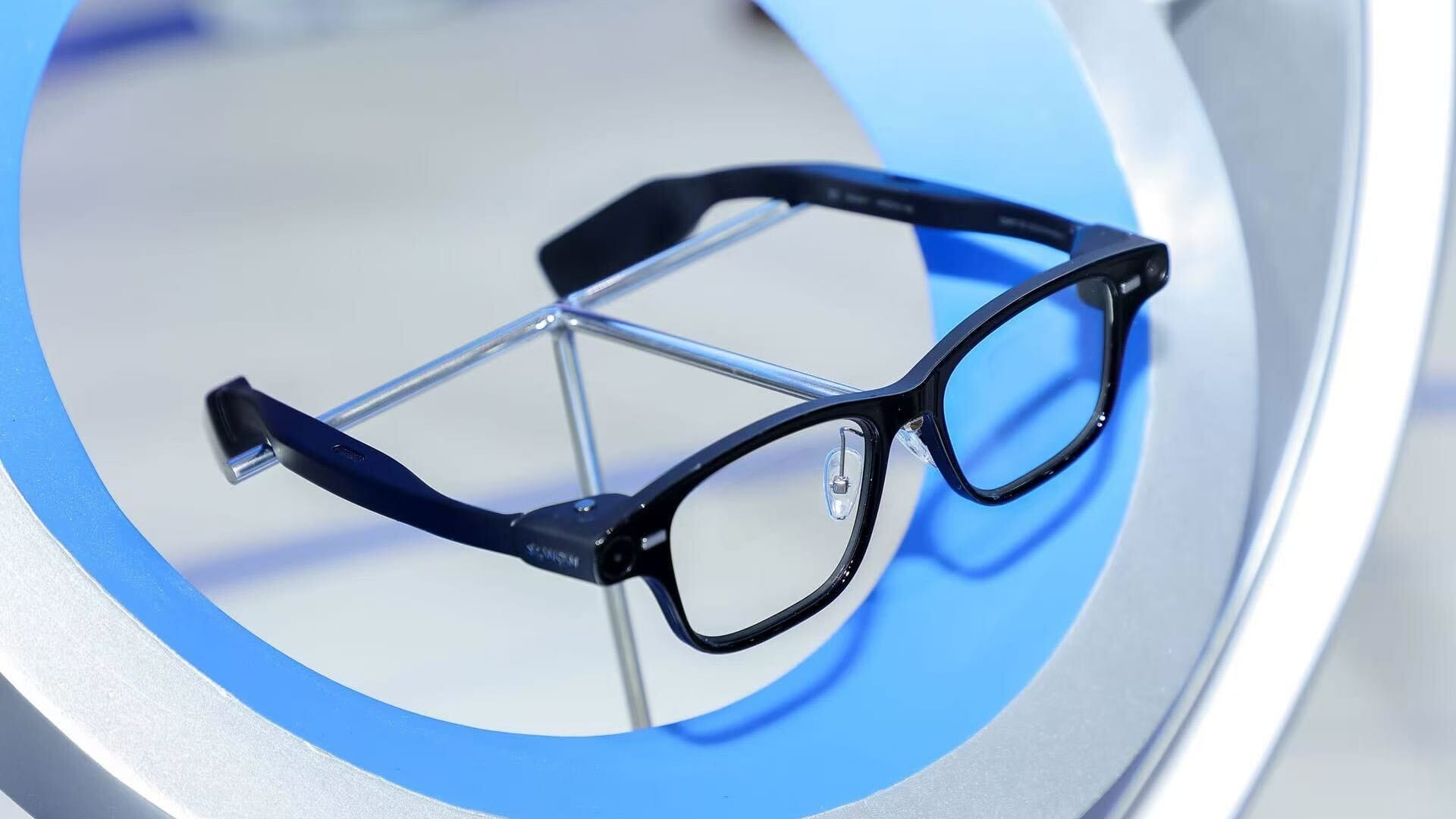
Alibaba has officially stepped into the smart-glasses arena with the launch of Quark AI Glasses, a pair of AI-powered wearables that mark the company’s most direct push yet into consumer augmented hardware. The release positions Alibaba as a potential challenger—at least on its home turf—to Meta’s Ray-Ban Display glasses, which debuted in the U.S. in September with an $800 price tag.
The new glasses are currently limited to the Chinese market, and Alibaba has introduced them in two variants, both leveraging the company’s proprietary Qwen AI model. The lineup includes the premium Quark AI Glasses S1, which feature built-in displays, and the more budget-friendly Quark AI Glasses G1, which omit the displays but retain much of the core technology.
Two Models, Two Markets
The Quark AI Glasses S1 start at ¥3,799 (~$540 USD) and are the flagship of the lineup. They include dual monochrome green micro-OLED displays, a design choice that sets them apart from Meta’s Ray-Ban Display glasses, which offer a single full-color display. Alibaba’s S1 model is powered by the Qualcomm Snapdragon AR1 chipset paired with a low-power co-processor, giving the glasses the ability to drive displays reaching up to 4,000 nits of brightness, according to reporting from South China Morning Post.
The S1 also includes an impressive suite of sensors and multimedia tools. A five-microphone array with bone-conduction audio supports hands-free interaction, while the glasses can record 3K video that is automatically upscaled to 4K. Alibaba claims the S1 features low-light enhancement technology capable of delivering smartphone-grade imaging quality in dim environments—an area where many smart-glasses products have struggled. One particularly practical feature is the hot-swappable battery system, which allows users to plug fresh battery modules directly into the glasses’ stem.
Meanwhile, the Quark AI Glasses G1, priced at ¥1,899 (~$270 USD), target users who may not need the display but still want access to onboard AI assistance and multimedia features. While the omission of the display will clearly differentiate the G1 from Meta’s offerings, its lower price point and shared core technology could help it gain traction among early adopters inside China.
How They Compare to Meta Ray-Ban Display
On paper, the Quark AI Glasses S1 are not a direct match for Meta’s Ray-Ban Display. While both use onboard AI and allow for photo/video capture, their approaches to display technology, interaction, and ecosystem integration differ significantly.
Meta’s glasses offer a full-color display, more advanced gesture-based interactions via the Neural Band, and support for UI manipulation such as scrolling, pinching, and zooming. Alibaba’s S1, by contrast, supports only voice and touch input, limiting more complex interface interactions. The dual monochrome displays on the S1 also restrict the type of visual information users can comfortably view.
Still, Alibaba seems to be betting that functional simplicity, paired with extensive ecosystem integration, will be enough. And in China, that bet might pay off. The glasses are tightly woven into the Qwen AI ecosystem, as well as Alipay’s ubiquitous QR-code payment infrastructure, offering a seamless hands-free payment experience that is already familiar to millions.
China-First Strategy and Global Prospects
While the Qwen AI model is available globally, it is unlikely that Alibaba will release the first-generation Quark AI Glasses S1 or G1 internationally. The company historically focuses its early-stage hardware on markets where it maintains strong ecosystem control, and competition with Meta on the global stage would introduce logistical and regulatory hurdles.
For now, Quark AI Glasses represent an important step in Alibaba’s broader ambition to bring AI-powered hardware into everyday life in China. Whether future versions will expand beyond that market remains to be seen—but the entry itself signals that the battle for AI wearables is only just beginning.