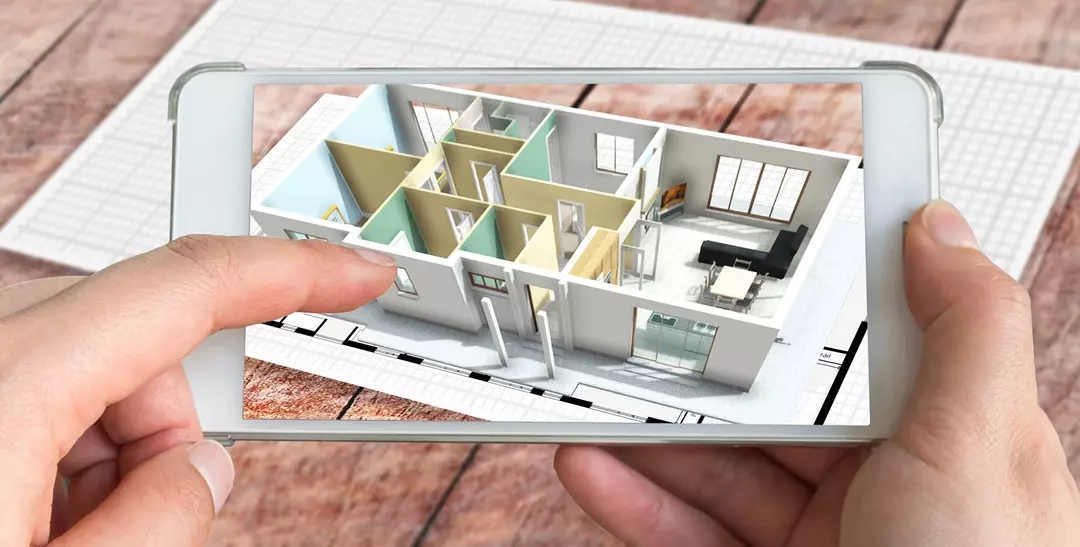
Augmented Reality and Virtual Reality have fundamentally transformed real estate from a transaction-driven industry into an immersive experience-driven market. By 2026, AR/VR technologies are reshaping how properties are discovered, evaluated, and purchased, enabling remote buyers to make confident purchasing decisions without physical property visits while helping real estate professionals dramatically accelerate sales cycles and expand their addressable markets globally.
Market Growth and Adoption Momentum
The global virtual tour real estate market is experiencing substantial growth, with projections showing a compound annual growth rate (CAGR) of 13.4% from 2025 to 2035. Goldman Sachs estimates that virtual reality in real estate could reach USD 2.6 billion by 2026. More tellingly, approximately 1.4 million agents and brokers are expected to use AR/VR technologies by the end of 2025.
Consumer adoption reflects this momentum. Research demonstrates that 77% of prospective buyers prefer using virtual reality to view properties remotely, while 65% of homeowners believe that VR tours contribute to better understanding of property layout. These statistics underscore a fundamental shift in buyer preferences toward immersive digital experiences.
Despite this strong market tailwind, adoption remains surprisingly uneven. In Philadelphia, only 10% of listings include virtual tours, though higher-end properties show substantially greater adoption at 18% for condominiums compared to 7% for multi-family homes. This disparity suggests that while the technology proves valuable, implementation barriers continue limiting broader deployment.
Quantified Business Impact and Performance Metrics
Accelerated Sales Cycles and Time-to-Close
The most compelling metric driving AR/VR adoption in real estate is its dramatic impact on sales velocity. Properties with 3D virtual tours sell up to 31% faster than those without. This acceleration stems from multiple factors: reduced uncertainty enables faster decision-making, remote pre-screening eliminates wasted physical visits, and the immersive experience builds emotional connection driving purchase motivation.
Luxury real estate agencies in markets like Miami, London, and Dubai have documented remarkable results. By enabling international buyers to conduct thorough virtual inspections, agencies have reduced sales cycles from months to weeks. In one documented case, a luxury condo in New York remained unsold for two months. Once a 3D virtual tour was added, the property received multiple offers within a week, ultimately selling above asking price.
Increased Lead Generation and Buyer Interest
Listings with virtual tours generate 49% more leads than those with traditional photos alone. This lead multiplication reflects both increased visibility in search results and higher click-through rates from potential buyers who find immersive tours more compelling than static photos.
Moreover, virtual tours reduce tire-kicker showings by enabling serious pre-qualification. The average homebuyer physically tours approximately 15 properties before purchase. With AR-enabled property viewing, this number can drop substantially as buyers pre-screen remotely, focusing in-person visits on homes they genuinely prefer. This efficiency benefits both buyers and agents: buyers experience lower decision fatigue, agents concentrate effort on genuinely interested prospects.
Premium Pricing Impact
Staged properties—whether physically or virtually—command measurably higher sale prices. According to the National Association of Realtors (NAR), virtually staged homes sell for approximately 5-10% more than comparable unstaged properties. For high-end properties, this premium is even more substantial. Case studies from Sotheby’s International Realty document 6-10% price improvements for staged properties, translating to $30,000-$50,000 in added value on $500,000 homes.
Core AR/VR Applications Transforming Real Estate
3D Virtual Tours and Immersive Walkthroughs
3D virtual tours represent the foundational AR/VR application, combining 360-degree photography, 3D imaging, and sometimes augmented reality to create seamless virtual experiences. Successful platforms including Zillow, Redfin, and Realtor.com have integrated sophisticated 3D tour capabilities into their listing strategies, enabling potential buyers to navigate properties digitally as if physically present.
Realtor.com’s FlyAround feature uses 3D Maps from Google Maps Platform for deep satellite views, enabling buyers to check properties from comprehensive aerial perspectives. This bird’s-eye view capability is particularly valuable for understanding neighborhood context, proximity to amenities, and property surroundings—contextual information that ground-level tours alone cannot convey.
The emotional impact of immersive tours cannot be overstated. Virtual walkthroughs enable prospective buyers to experience how light fills rooms throughout the day, visualize the spatial layout intuitively, and develop emotional connection to spaces they’re considering—experiences static photos fundamentally cannot provide.
AI-Powered Virtual Staging
Artificial Intelligence has revolutionized property visualization through virtual staging, transforming empty, uninviting properties into professionally decorated spaces in seconds. Rather than expensive physical staging involving furniture rental, transportation, and manual setup, AI staging systems analyze room dimensions, lighting, and architectural details to place virtual furniture and décor seamlessly.
The impact on buyer psychology is profound. Approximately 83% of buyer’s agents believe staging makes it easier for buyers to visualize properties as future homes. Beyond psychological impact, the business results are striking:
- Staged homes sell 73% faster than unstaged counterparts, reducing market time from 90 days to just 24 days
- AI staging increases buyer inquiries by 50-200%
- Virtually staged properties generate 32% higher viewing rates compared to unstaged listings
- Cost reduction: AI staging costs approximately 70% less than traditional physical staging
Coldwell Banker documented that AI-staged listings achieved 74% more in-person showings than unstaged properties. Sotheby’s International Realty achieved 8-12% higher prices for upscale properties through virtual staging, translating to $80,000-$120,000 in added value for $3,000-$4,000 staging investments.
In 2026, AI virtual staging continues advancing toward photorealistic results delivered in under one minute, with platforms enabling agents to market properties faster while maintaining professional quality. The ability to generate multiple staging options—minimalist, luxury, family-oriented—enables personalization to specific buyer personas and demographics.
AR-Enabled Interior Design and Space Visualization
AR applications enable prospective buyers to visualize furniture placement and interior design in actual properties. Rather than struggling to imagine how their furniture will fit or how the space will look with their design preferences, buyers use smartphone AR to superimpose their furniture in the empty space.
This feature addresses a fundamental challenge in real estate: most prospective buyers purchase unfurnished properties yet struggle to visualize spaces without existing furniture. AR solves this through interactive visualization—a family considering a new home can see if their couch will fit in the living room or if their dining table will work in the dining area, effectively eliminating purchase uncertainty.
PropVR’s AR-enabled interior design capabilities exemplify this application. Buyers can use smartphones to visualize current furniture and décor in new spaces, making decision-making more accessible and personalized, directly increasing purchase likelihood.
Remote Collaborative Guidance and Expert Consultation
AR enables agents and clients to access the same virtual tour simultaneously, sharing visual reference and enabling remote guided tours. Rather than describing properties over video calls, agents can point out features while both parties visualize identical spaces, replicating the intimacy of in-person guided tours.
This capability is transformative for luxury real estate and international transactions. High-net-worth buyers can receive expert guidance from agents across geographic distances, with agents highlighting key features and discussing design elements in context. The synchronized visual experience creates shared understanding impossible through traditional remote communication.
Location-Based AR and Neighborhood Context
Emerging location-based AR capabilities enable buyers walking neighborhoods to instantly access property information by pointing smartphones at homes. Property details including size, rental price, and agent contact information appear overlaid on properties. This ambient information access enables opportunistic discovery—a buyer spot a home they love and instantly access details without manual research.
Realtor.com is expanding these capabilities by integrating neighborhood amenity information—schools, parks, shopping districts—as interactive overlays in AR property tours. This context dramatically improves buyer understanding of location value, essential information that property-focused tours alone cannot convey.
Leading Platforms and Technology Providers
Matterport: The 3D Tour Standard
Matterport dominates the 3D virtual tour market, offering comprehensive solutions for creating highly detailed, immersive tours. The platform’s widespread adoption among real estate professionals reflects user preference for Matterport’s superior visual quality and seamless platform integration.
Agents and sellers have documented that comprehensive Matterport tours filter out unserious buyers, concentrating showings on genuinely interested prospects. One agent’s testimony exemplifies this impact: after implementing Matterport tours on luxury listings, qualified buyer inquiries increased substantially while tire-kicker showings decreased proportionally.
Zillow and Redfin: Mainstream Platform Integration
Zillow’s 3D Home tours and Zillow 3D app have democratized virtual tour access for mainstream buyers. Rather than requiring specialized software or technical expertise, buyers can access 3D tours directly within Zillow’s property listings, eliminating friction from the discovery experience.
Similarly, Redfin’s integration of 3D tours into its platform has accelerated adoption among both agents and buyers seeking properties outside their immediate regions. These mainstream platform integrations are critical for widespread adoption—virtual tour access embedded in platforms buyers already use dramatically increases utilization compared to requiring separate applications.
PropVR and Specialized AR Applications
PropVR combines VR property tours with AR interior design capabilities, enabling buyers to experience properties virtually while visualizing furnishings and design options. This integrated approach—combining immersive exploration with interactive customization—delivers superior user experiences compared to single-modality solutions.
AI-Powered Virtual Staging Platforms
Specialized platforms including StageVirtually and Bella Staging leverage AI to rapidly generate photorealistic staged photos. These tools enable agents to transform empty property photos into professionally decorated spaces in minutes rather than days, with dramatic cost savings compared to traditional staging.
AI-AR Convergence Amplifying Impact
Personalization at Scale
AI algorithms analyzing buyer preferences, browsing behavior, and property search history combined with AR visualization enable hyper-personalized property tours. Rather than generic experiences, AI tailors virtual staging to specific buyer personas—luxury furnishings for high-end buyers, family-oriented designs for families, eco-friendly features for environmentally conscious buyers.
AI can predict which property features and design styles will resonate with specific buyers based on historical data and demographic analysis. This personalization translates property information into emotional connection, dramatically improving buyer engagement compared to standardized tours.
Emotion Recognition and Buyer Insight
Advanced AI systems analyze facial expressions and physiological responses during immersive tours, providing valuable feedback about emotional connections to properties. This biometric feedback enables agents to understand which features capture buyer interest, informing follow-up conversations and property recommendations.
Predictive Analytics and Market Intelligence
AI-driven demand forecasting analyzes supply/demand trends, local market dynamics, and consumer behavior to predict property popularity. Agents and sellers use these insights to strategically price properties, optimize marketing approaches, and time market entry—maximizing returns through data-informed decision-making.
Emerging Metaverse Real Estate and Future Applications
Virtual Land and NFT-Based Property Ownership
The metaverse real estate market represents an emerging frontier where virtual land is bought and sold as non-fungible tokens (NFTs) within digital worlds. While fundamentally different from physical real estate, metaverse property investment demonstrates how AR/VR technologies are expanding real estate markets into entirely digital dimensions.
Early metaverse real estate investors have documented substantial returns, with prime digital properties appreciating 500% or more within months. Platforms like Decentraland and The Sandbox enable developers, businesses, and investors to acquire virtual land, develop structures, host events, and generate revenue.
While speculative, metaverse real estate demonstrates the expansive possibilities of immersive technology applications. Professional real estate developers are exploring metaverse opportunities, recognizing the potential to shift traditional expertise into virtual markets.
Formidable Implementation Challenges and Barriers
Despite compelling benefits, significant obstacles impede widespread AR/VR adoption in real estate.
Surprisingly Low Adoption Despite Clear Benefits
The most perplexing challenge is adoption reluctance despite overwhelming evidence of benefits. In Philadelphia, only 10% of listings include virtual tours, even though documented data clearly shows that virtual tours generate 49% more leads, accelerate sales 31%, and justify their implementation costs through improved outcomes.
Interviews with real estate professionals reveal surprising resistance. Many agents perceive virtual tours as additional expenses rather than essential investments. This perception persists despite clear ROI documentation, suggesting that organizational inertia and traditional approaches outweigh rational economic analysis.
High Equipment and Implementation Costs
Upfront hardware investments for professional 3D scanning and AR development equipment represent substantial barriers. While consumer-grade equipment costs have decreased, professional-grade tools capable of creating high-quality tours remain expensive. Small and mid-sized brokerages struggle to justify these investments without clear immediate ROI.
Technical Complexity and Infrastructure Requirements
Creating high-quality 3D models and AR experiences requires specialized technical expertise. Many real estate professionals lack knowledge of AR/VR platforms, limiting their ability to effectively implement these technologies. Organizations must invest in training programs to build technical capabilities, creating additional costs and organizational disruption.
Internet connectivity remains problematic in resource-constrained regions. AR experiences require fast, stable internet connections for real-time delivery, yet rural areas often lack the fiber-optic infrastructure supporting data transmission speeds necessary for smooth AR experiences.
Health and Safety Concerns
Extended VR headset use can cause eye strain, motion sickness, and physical discomfort, limiting user tolerance. These physical considerations require careful attention to ergonomic design and usage duration limits, adding complexity to deployment. Health warnings must accompany VR experiences, protecting users while potentially discouraging adoption among risk-averse consumers.
Standardization and Quality Inconsistency
Lacking industry-wide standards, AR/VR implementations vary dramatically in quality, compatibility, and user experience. This fragmentation creates consumer confusion and inconsistent expectations across platforms. Establishing standardized technical specifications and best practices remains an industry priority but continues proving elusive.
Strategic Implementation Roadmap for 2026
Immediate Priority: Virtual Tours as Standard Offering
Real estate professionals seeking competitive advantage in 2026 should prioritize comprehensive 3D virtual tours as non-negotiable listing components rather than premium add-ons. The compelling evidence of lead generation, sales acceleration, and premium pricing justifies the investment in Matterport, Zillow 3D, or comparable platforms.
Tier-Based Approach by Property Category
Organizations should implement a tiered approach, allocating AR/VR resources strategically. High-end properties, commercial real estate, and pre-construction developments warrant investment in comprehensive immersive experiences. Standard residential properties can leverage cost-effective AI virtual staging and simplified 3D tours.
AI Virtual Staging Integration
Rather than expensive professional physical staging, organizations should implement AI virtual staging for vacant or outdated properties. The 70% cost savings, rapid turnaround, and demonstrated 73% faster sales justify this investment as standard practice.
Training and Organizational Change Management
Real estate organizations must invest in training programs building technical proficiency among agents and administrative staff. Overcoming organizational resistance requires demonstrating documented success and providing adequate support infrastructure.
Measurement Framework Development
Organizations should establish clear metrics tracking AR/VR performance: lead generation impact, time-to-sale improvement, sale price premium, and cost of implementation. Quantifying ROI transforms virtual tours from discretionary expenses to justifiable investments.
Future Outlook: 2026-2027 Trajectory
The National Association of Realtors (NAR) forecasts a 14% increase in home sales for 2026, with home prices expected to climb 4%, supported by job growth and persistent supply shortages. This market expansion will likely accelerate AR/VR adoption as agents seek every competitive advantage to capture increased demand.
By 2027, AR/VR capabilities are likely to become industry standard rather than competitive differentiators. Real estate professionals will compete based on execution quality and creative implementation rather than mere technology adoption. Integration with smart home technologies, blockchain-based transactions, and AI-powered personalization will deepen, creating increasingly sophisticated digital-first real estate experiences.
PropTech investment continues accelerating, with companies investing approximately USD 100 billion in AI-powered real estate technology development. This capital influx will drive innovation in virtual staging, AR visualization, and immersive experiences, enabling continuous capability enhancement throughout 2026-2027.
Comparative Analysis: Application Categories
| Application | Technology | Primary Use Case | Business Impact | Adoption Status |
|---|---|---|---|---|
| 3D Virtual Tours | 360° photography + 3D imaging | Remote property exploration | 49% more leads, 31% faster sales | 10-18% adoption (wide variation) |
| AI Virtual Staging | Machine learning furniture placement | Vacant property marketing | 73% faster sales, 50-200% more inquiries | Growing rapidly, cost-effective |
| Location-Based AR | Mobile GPS + property information | Neighborhood context and discovery | Spontaneous discovery, contextual information | Early stage, limited deployment |
| AR Interior Design | Augmented reality furniture visualization | Space planning and design | Reduced purchase uncertainty | Emerging, niche adoption |
| Remote Collaborative Tours | VR + real-time synchronization | International luxury sales | Sales cycle reduction (months → weeks) | Specialized luxury market |
| Metaverse Real Estate | Virtual land NFTs + blockchain | Digital real estate investment | Portfolio diversification | Speculative, niche market |
Augmented and Virtual Reality technologies have matured into genuine transformative forces in real estate, not speculative technologies or luxury novelties. The evidence is overwhelming: virtual tours generate 49% more leads, accelerate sales by 31%, and command measurable price premiums while AI virtual staging costs 70% less than traditional staging while delivering superior results.
The paradox facing the industry is that despite clear evidence of benefits, adoption remains surprisingly uneven. This discrepancy reflects organizational inertia, perception of high costs, and lack of technical expertise rather than genuine limitations of the technology.
Real estate organizations positioning themselves for success in 2026-2027 recognize that AR/VR technologies are no longer optional enhancements but fundamental infrastructure for competitive practice. Those who strategically implement comprehensive virtual tours, integrate AI virtual staging, and invest in staff training will capture disproportionate market share as expanded homebuying activity accelerates throughout 2026.
The future of real estate is demonstrably immersive, interactive, and powered by augmented reality. The question for real estate professionals is no longer whether to adopt these technologies, but rather how quickly they can deploy them effectively to maximize competitive advantage in an increasingly technology-enabled marketplace.