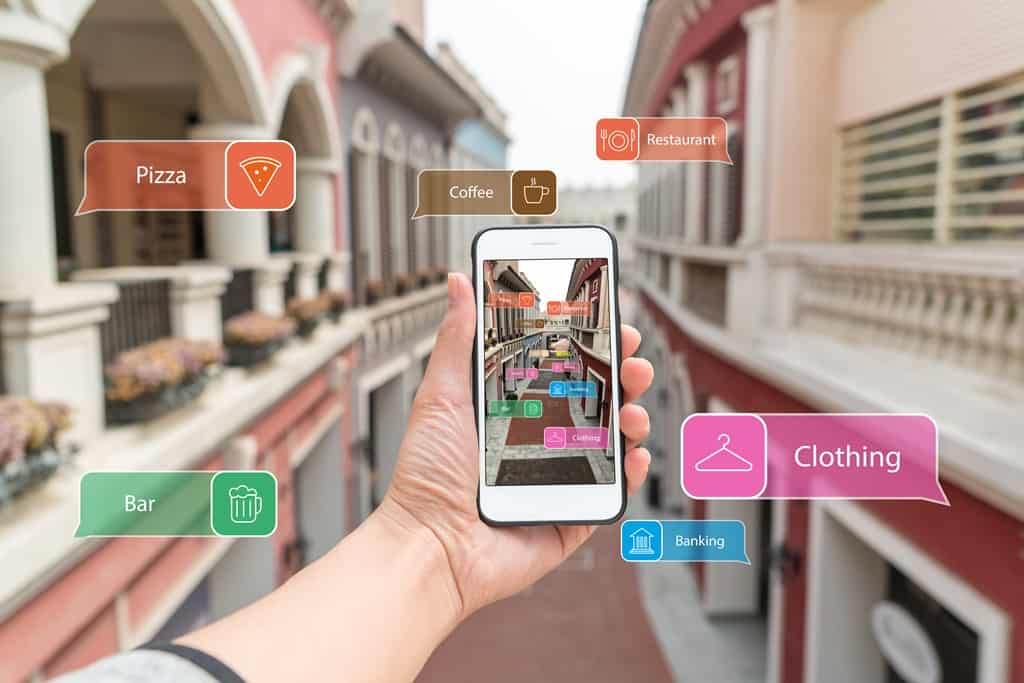
Augmented Reality has undergone a remarkable democratization over the past two years, transforming from an expensive enterprise technology into an accessible tool for small businesses with modest budgets. By 2026, small and medium-sized enterprises (SMEs) can leverage powerful AR capabilities with total implementation costs ranging from just a few hundred dollars to a few thousand, compared to the $50,000-$250,000 budgets required for custom AR development five years ago.
Market Opportunity and Business Case for SMEs
The AR Advantage is Measurable
The financial case for AR adoption by small businesses is increasingly compelling. Fortune 1000 companies utilizing AR experiences on Snapchat and TikTok achieved an average return on ad spend of 460%, compared to 200-300% for traditional digital advertising. For small businesses, these metrics translate into exceptional value: a modest $500 AR investment could reasonably generate $2,300 in return under conservative assumptions.
Engagement metrics demonstrate why this ROI is achievable. AR experiences generate 45-75 seconds of engagement compared to 6-8 seconds for traditional billboards, and social sharing rates are 12 times higher for AR content. For conversion-focused applications, AR-enabled retail experiences achieve a 31% increase in sales conversions while virtual try-on features lower return rates by 22-40%.
Real business examples quantify the impact. A small e-commerce outdoor gear retailer implementing AI-powered product recommendations increased average cart size by 15% within six weeks, achieving ROI within 45 days. These improvements compound—a 15% cart increase on a $100 average order value translates to $15 additional revenue per customer, meaningfully impacting small business profitability.
Customer Adoption is Accelerating
Consumer readiness for AR experiences eliminates adoption friction that plagued earlier implementations. Approximately 77% of prospective buyers prefer using virtual reality to view properties remotely, demonstrating mainstream acceptance. On social platforms where small businesses actively market, 71% of Instagram users have engaged with an AR filter in the past 30 days, creating a familiar user base predisposed to AR experiences.
Budget-Friendly Platform Solutions
Free and Low-Cost Tools Democratizing AR Access
The most transformative development enabling small business AR adoption is the emergence of comprehensive, free or ultra-affordable platforms requiring no coding expertise.
Snapchat Lens Studio and TikTok Effect House
Snapchat Lens Studio and TikTok Effect House represent genuine game-changers for budget-conscious entrepreneurs. Both platforms are completely free, enabling creation of professional AR effects for billions of potential users. The only requirement is basic creative skills—no programming expertise is necessary.
Lens Studio, available for Windows and Mac, enables creation of viral selfie lenses and shoppable try-on experiences deployed instantly to Snapchat’s audience of millions. The platform now includes GenAI Suite capabilities, empowering users to build custom ML models, 2D and 3D assets using simple text or image prompts. This generative AI integration means small business owners can create sophisticated AR content simply by describing what they want.
TikTok Effect House offers similar capabilities tailored for TikTok’s ecosystem, enabling SMEs to create branded AR effects reaching younger demographics where social commerce is rapidly growing. The platform integrates directly with TikTok, eliminating friction from content discovery and deployment.
Web-Based AR (WebAR) Platforms: The No-App Revolution
WebAR represents perhaps the most significant democratization driver for SME adoption. By eliminating app download requirements, WebAR dramatically reduces friction from the user experience—a critical advantage for time-constrained consumers.
Leading WebAR platforms offer remarkably affordable pricing while maintaining professional quality:
Zapworks Designer ($49-$68/month): An all-in-one AR platform with intuitive drag-and-drop interfaces enabling non-technical creators to build engaging AR campaigns without extensive technical skills. Multiple templates support diverse use cases from product packaging overlays to interactive brochures.
8th Wall (flexible pricing, affordable tiers for SMEs): Enables AR experiences running directly in browser environments without app downloads. Perfect for virtual try-ons, interactive menus, or immersive marketing campaigns.
Vossle ($29-$99/month): An Indian-made WebAR platform specifically optimized for SME budgets, enabling AR experience creation and deployment in minutes without coding. The platform emphasizes speed and simplicity, delivering functional AR campaigns within hours rather than weeks.
ROAR (free basic tier, $29-$50/month paid plans): A no-code platform supporting features like 3D product visualization and AR ads. The free basic tier enables experimentation, with paid upgrades enabling commercial deployment.
BlippAR (customizable plans): Enables interactive AR content creation for social media, packaging, and print materials, offering flexible pricing aligned with SME budget constraints.
Cost-Effective 3D Model Creation
A common misconception inhibits SME AR adoption: the belief that creating 3D product models requires expensive professionals. In reality, several affordable options enable small businesses to source quality 3D models economically:
- Fiverr and Upwork: Simple product 3D models cost as little as $30-$50, enabling cost-effective model creation at budget-friendly rates
- Free resources: Sketchfab and similar platforms offer royalty-free 3D models suitable for many SME use cases
- In-house creation: Free tools like Blender enable tech-savvy entrepreneurs or employees to create basic models, eliminating outsourcing costs entirely
Practical Implementation by Business Type
E-Commerce and Product Visualization
For e-commerce businesses, virtual try-on experiences represent high-ROI investments. Fashion retailers can leverage platforms like Zakeke ($19.90/month) enabling customers to visualize products before purchase. The dual benefit—increased conversions and reduced returns—creates measurable profitability improvements.
A practical implementation roadmap:
- Select platform (Zakeke, Vossle, or WebAR solution)
- Source 3D models of top-selling products ($30-$50 per model)
- Create simple visualization experience (2-3 hours with platform templates)
- Promote via email, social media, and website
- Track conversion lift and return rate improvements
Expected outcomes: 15-30% increase in conversion rates for products with AR visualization, 20-35% reduction in return rates.
Restaurant and Hospitality
Restaurants and hospitality businesses can create interactive menus or location-based AR experiences with exceptional engagement. A restaurant deploying AR menu visualization enabling customers to see realistic product images drives increased orders and upsell opportunities.
Implementation for a casual restaurant:
- Photograph menu items with consistent lighting
- Create simple AR overlay using Snapchat Lens Studio (free)
- Generate QR codes linking to WebAR menu experience
- Place QR codes on physical menus and table tents
- Track engagement and upsells
Estimated implementation cost: $0 (free tools) + $100-200 for professional photography.
Beauty and Personal Care
Beauty retailers can implement virtual try-on experiences addressing the primary purchase barrier: uncertainty about product fit. Sephora’s Virtual Artist generates exceptional engagement—platforms like Vossle enable similar capabilities for small beauty boutiques.
Implementation approach:
- Access Vossle free trial
- Configure top 10-20 SKUs with try-on capability
- Promote feature across social channels
- Collect customer feedback and refine experience
Estimated investment: $300-$500 annually for platform access plus modest promotion budget.
Service Businesses and Training
Service-based businesses including plumbers, electricians, HVAC contractors, and fitness trainers can leverage AR for training and customer education. TeamViewer Frontline ($49/user/month) enables remote assistance with AR-guided instructions, dramatically improving field service efficiency and reducing training requirements.
Platform Comparison and Selection Framework
| Platform | Best For | Cost | Learning Curve | Key Advantage |
|---|---|---|---|---|
| Snapchat Lens Studio | Social AR campaigns, viral reach | Free | Moderate | Access to billions of Snapchat users |
| TikTok Effect House | Gen Z targeting, social commerce | Free | Moderate | Native TikTok integration |
| Zapworks Designer | WebAR, no coding needed | $49-68/month | Low | Drag-and-drop simplicity |
| 8th Wall | Browser-based AR experiences | Flexible, SME-friendly | Low-Moderate | No app download required |
| Vossle | Fast WebAR creation, SME-focused | $29-99/month | Low | Speed and simplicity emphasis |
| ROAR | Interactive AR campaigns | Free-$50/month | Low | Free tier for experimentation |
| BlippAR | Interactive content, packaging | Custom pricing | Low-Moderate | Flexible for diverse use cases |
| Zakeke | E-commerce product visualization | $19.90/month | Low | Shopify/WooCommerce integration |
| TeamViewer Frontline | Field service and training | $49/user/month | Moderate | Enterprise-grade features for SMEs |
Strategic Implementation Steps for SMEs
Phase 1: Experimentation (Weeks 1-2, Cost: $0-100)
Small businesses should begin with zero-cost platforms to validate AR’s relevance to their customers and business model:
- Create Snapchat and TikTok business accounts if not existing
- Build simple AR lenses using Lens Studio (free) targeting your audience
- Source existing 3D models from Sketchfab for initial experiments
- Deploy to social channels and track engagement metrics
- Gather customer feedback about AR experiences
This low-risk experimentation phase determines whether AR aligns with customer preferences before substantial investment.
Phase 2: Focused Implementation (Weeks 3-8, Cost: $300-1,500)
Based on Phase 1 learning, implement focused AR application addressing specific business need:
- Select platform matching implementation requirements
- Create or source 3D product models ($100-300 for multiple items)
- Deploy AR experience to platform
- Integrate with existing marketing and sales channels
- Establish measurement framework tracking key metrics
Implementation timeline: 3-4 weeks for most SMEs with modest technical expertise.
Phase 3: Optimization and Scaling (Ongoing, Cost: Platform subscription + content)
Based on Phase 2 performance metrics, optimize and expand AR implementation:
- Analyze engagement, conversion, and ROI data
- Refine based on customer feedback and performance
- Expand to additional products or use cases
- Integrate with email marketing and social campaigns
- Train team on AR platform operation and optimization
Overcoming Common Implementation Barriers
Misconception 1: “AR Requires Technical Expertise”
Reality: Modern no-code platforms enable creation by non-technical business owners. Templates, tutorials, and AI-assisted generation eliminate programming requirements. A motivated entrepreneur with basic computer skills can deploy functional AR experiences within days.
Misconception 2: “AR is Too Expensive”
Reality: Annual AR implementation for small businesses ranges from $300-$1,500 including platform subscription and basic 3D models—comparable to moderate marketing spending. Compare this to $20,000-$100,000 for custom development five years ago.
Misconception 3: “Customers Won’t Use AR”
Reality: Consumer adoption is accelerating rapidly. 77% of buyers prefer VR property viewing, 71% of Instagram users engage with AR filters monthly, and AR campaigns achieve 460% ROI on Snapchat and TikTok. Customer friction is primarily about access difficulty—WebAR eliminates this barrier.
Misconception 4: “My Phone Won’t Support AR”
Reality: 99% of smartphones sold since 2016 support AR through ARCore (Android) or ARKit (iOS). Older devices represent a tiny percentage of the user base. Approximately 90% of global smartphone users have devices capable of supporting AR experiences.
Critical Success Factors
Clear Purpose and Business Objective
Successful AR implementations address specific business challenges: increasing conversion rates, reducing returns, improving engagement, or enabling remote guidance. Implementing AR for its own sake, without clear business objective, wastes resources and creates cynicism about the technology.
Marketing and User Awareness
A perfectly designed AR experience that customers don’t know about generates no business value. SMEs must actively promote AR capabilities through email, social channels, website optimization, and in-store signage. Promotion typically consumes 30-50% of implementation effort.
Measurement and Optimization
Successful AR implementations track specific metrics: engagement duration, conversion rates, return rates, average order value, and customer satisfaction. Regular analysis enables continuous optimization, separating high-impact initiatives from underperforming experiments.
Iterative Approach
Rather than attempting comprehensive AR transformation, successful SMEs deploy focused, measurable pilot projects validating ROI before expansion. A pilot for top 10 products, specific customer segment, or single use case reduces risk while enabling learning.
Future Outlook and 2026-2027 Trajectory
By 2027, AR capabilities are projected to become increasingly integrated into mainstream e-commerce and marketing platforms. Shopify, WooCommerce, and other SME-focused commerce platforms are expanding native AR functionality, enabling one-click deployment without separate platform selection.
AI integration will continue advancing, enabling automated 3D model generation from product photographs. A small business owner uploading a photo could receive quality 3D models suitable for AR within minutes rather than days—eliminating one of the remaining friction points.
Social platforms will expand AR shopping capabilities. TikTok Shop, Instagram Shopping, and similar features increasingly support AR try-ons directly within shopping experiences, enabling conversions without customer friction.
Practical First Steps for SMEs
This Week:
- Create free Snapchat and TikTok business accounts
- Download Lens Studio and explore basic templates
- Identify 3-5 products or services suitable for AR visualization
- Research relevant platforms for your use case
Next 2 Weeks:
- Source or create 3D models for pilot products ($100-200)
- Deploy test AR experiences using free tools
- Promote to existing customer base and gather feedback
- Measure engagement and track key metrics
Month 2:
- Select paid platform based on pilot learning
- Implement focused AR application addressing highest-ROI use case
- Establish measurement framework
- Train team on platform operation
Month 3 Onward:
- Analyze performance data and optimize
- Expand to additional products or use cases based on ROI
- Integrate AR into core marketing and sales processes
- Build organizational capability in AR deployment
The democratization of augmented reality technology represents a genuine competitive advantage opportunity for small businesses willing to experiment and invest modestly in learning. The combination of free platforms (Snapchat Lens Studio, TikTok Effect House), affordable no-code solutions ($29-68/month), and declining 3D model creation costs ($30-50 per model) has fundamentally changed the AR accessibility equation.
The question for small business owners in 2026 is no longer whether AR is accessible or affordable, but rather whether competitors are moving faster to capture this competitive advantage. Early-adopting small businesses implementing focused, measurable AR pilots are demonstrating 15-30% conversion improvements, 20-35% return reductions, and exceptional engagement metrics impossible to achieve through traditional marketing channels.
The time for SMEs to experiment with augmented reality is now. Start small, measure rigorously, and scale what works. With realistic first-year budgets of $300-$1,500 and proven platforms enabling rapid deployment, small businesses can implement production-ready AR experiences within weeks rather than months, positioning themselves as innovation leaders in their markets while delivering measurable business value.