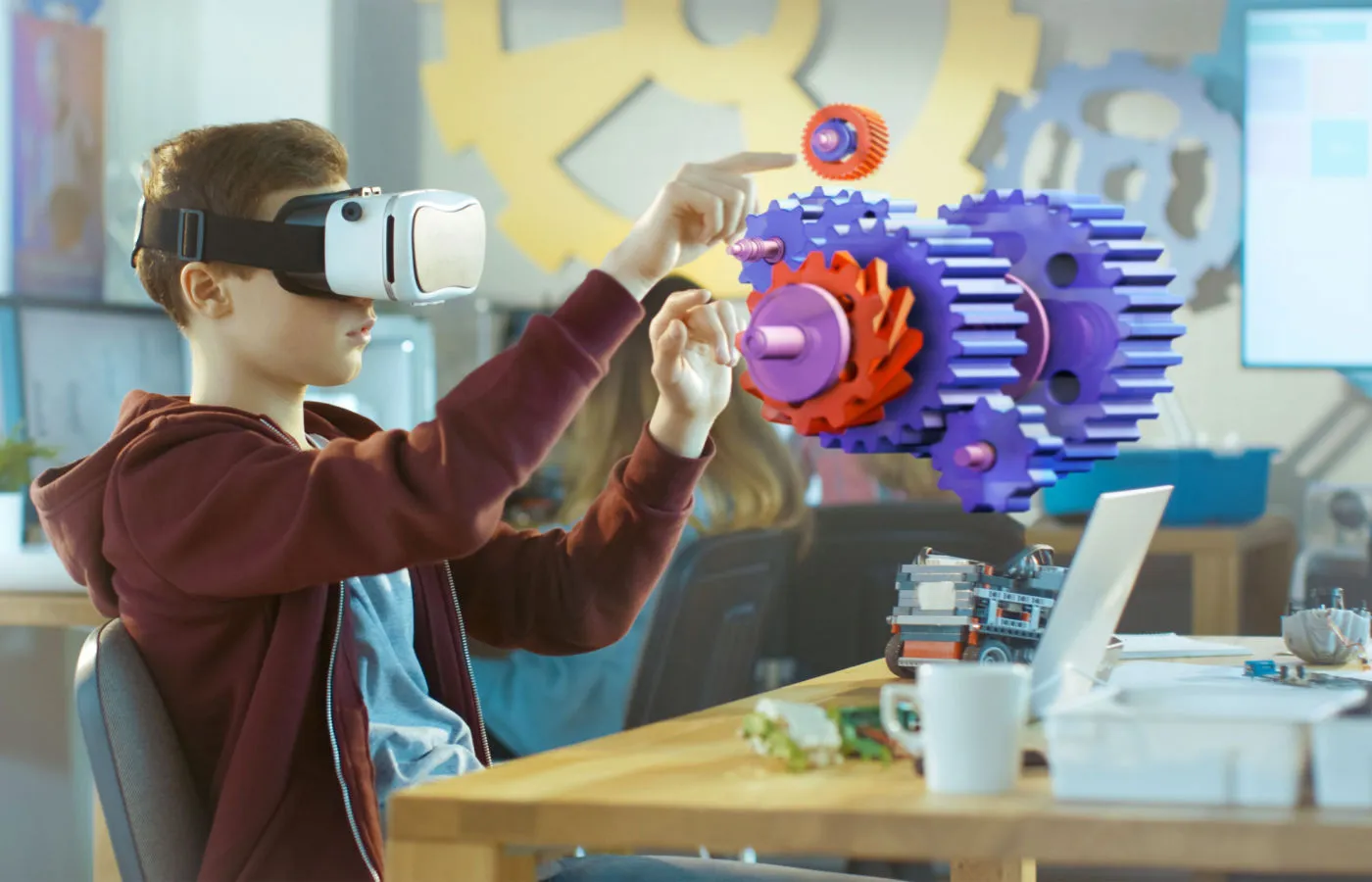
Augmented Reality (AR) has transitioned from an experimental technology into a transformative force reshaping education. By 2026, AR is positioning itself as a critical component of modern pedagogy, enabling educators to bridge the gap between abstract concepts and concrete understanding while fostering deeper student engagement and measurably improved learning outcomes.
The Compelling Case for AR in Education
Quantified Learning Improvements
Research demonstrates strikingly concrete improvements in learning outcomes when AR is integrated into classroom environments. A meta-analysis examining VR/AR implementations shows that immersive experiences can improve academic performance by up to 30%. More specifically, a quasi-experimental study in secondary biology found that students using AR-enhanced instruction achieved significantly higher post-test scores—81.0% for the experimental group versus 76.1% for the control group, representing a statistically significant 5% improvement with a moderate effect size (Cohen’s d = 0.61). While modest in absolute terms, this difference becomes substantial when multiplied across entire student populations and educational systems.
The retention advantage is even more dramatic. Research by the National Training Laboratory discovered that VR learning achieves a 75% retention rate compared to just 10% for reading-based learning and 5% for lecture-style instruction. PwC research confirms that AR/VR learners acquire information four times faster and maintain four times more focus than traditionally taught counterparts.
Enhanced Student Engagement and Motivation
Beyond test scores, AR fundamentally transforms classroom dynamics. Survey results from AR implementations consistently show that learners perceived AR-based lessons as significantly more engaging, motivating, and enjoyable than traditional instruction. Students rated AR lessons highly across multiple dimensions—enjoyment, comprehension, and motivation all exceeded 4.0 on Likert scales, demonstrating sustained positive perception. Teachers observing these implementations report increased attentiveness, greater participation, and more frequent student questioning during AR lessons.
Gamification 2.0—the convergence of AR with game mechanics—demonstrates even more dramatic engagement improvements. According to research, gamification can improve educational outcomes by 45.4%, while challenge-based gamification increases e-learning effectiveness by an impressive 89.4%.
Cognitive and Emotional Benefits
AR’s effectiveness is rooted in cognitive science. The technology leverages multiple sensory channels simultaneously—visual, auditory, kinesthetic, and tactile—creating what researchers call “multisensory learning experiences”. This multisensory approach anchors abstract concepts in concrete, manipulable forms, dramatically improving comprehension for students who struggle with purely symbolic representations.
Emotional engagement represents a critical but often-overlooked benefit. AR experiences evoke emotion through immersive scenarios and storytelling, and emotional experiences are closely tied to memory formation. This emotional dimension makes information more memorable, extending retention benefits across even traditionally less-engaging subjects.
Core Applications Transforming Subject Areas
Science Education and Virtual Laboratories
Science education exemplifies AR’s transformative potential. Virtual laboratories enable students to conduct experiments without risk, expensive equipment, or safety concerns. Students can dissect virtual organisms, explore molecular structures in 3D, investigate the solar system, observe chemical reactions in real-time, and manipulate variables without physical constraints.
One California middle school case study implementing AR for biology achieved a 30% increase in student performance as their ability to retain information improved. Students not only performed better on assessments but displayed significantly greater curiosity about material, prompting them to investigate topics beyond the curriculum.
The ScienceAR application, developed for secondary biology in resource-constrained schools, demonstrates practical classroom deployment. Students transformed abstract textbook illustrations into interactive three-dimensional models, creating opportunities for experiential learning that made previously inaccessible content tangible.
Medical and Anatomical Education
Medical education has emerged as one of AR’s most compelling applications. Traditional anatomy education faces a fundamental challenge: the human body’s spatial complexity is nearly impossible to convey through 2D images or even dissection alone. AR addresses this directly by enabling interactive exploration with superior visibility.
Case Western Reserve University’s HoloAnatomy app revolutionized anatomy teaching by eliminating the need for traditional cadaver labs, while still providing the spatial relationships and structural understanding essential to medical practice. Jagiellonian University Medical College in Poland similarly integrated AR glasses into anatomy classes, giving students intuitive understanding of spatial relationships.
Specialized AR applications address specific clinical skills. Hellovein, an AR-based vein finder, projects real-time visuals over patient skin to show vein locations, dramatically improving accuracy during phlebotomy training and building student confidence in essential clinical skills. AnatomyX, built for full-body 3D anatomy education, is now available on Microsoft HoloLens 2, Meta Quest 3/3S, and Apple Vision Pro, supporting K-12 through residency programs with 8,000+ anatomic parts and 13,000+ assessments.
In surgical settings, AR overlays critical information like 3D patient anatomy reconstructions directly onto physicians’ fields of view. Stanford Medicine has integrated AR headsets into operating rooms, enhancing surgical precision and supporting more informed decision-making. For medical trainees, AR-assisted procedures provide exposure to advanced techniques and real-time decision-making processes, conveying spatial relationships and procedural workflows that traditional methods cannot.
Historical and Cultural Reconstruction
History education transcends memorization when students can virtually explore historical sites, witness reenactments of significant battles, and engage with historical artifacts in 3D. AR-enhanced history lessons transform passive learning into active exploration, fostering deeper connections to historical content as students engage directly with material rather than reading descriptions.
Virtual field trips enable students to explore ancient ruins, visit renowned museums, and investigate archaeological sites without leaving the classroom. This immersive experience helps students visualize concepts and fosters understanding that textbooks alone cannot achieve.
Mathematics Visualization and Geometry
Mathematics benefits profoundly from AR’s ability to visualize abstract concepts. Students can manipulate 3D geometric shapes from all angles, exploring how rotation and perspective affect spatial relationships. In geometry lessons, AR applications project geometric forms into the classroom, enabling learners to examine these forms from different perspectives—an experience that reinforces spatial visualization skills essential in mathematics, architecture, engineering, and even art.
More advanced applications display interactive models, graphs, and geometric shapes overlaid on real-world surfaces. Students can manipulate virtual shapes or solve math problems in virtual environments, transforming abstract mathematical concepts into concrete, interactive experiences.
Language Learning and Cultural Immersion
Language learning represents one of AR’s most versatile applications. Rather than memorizing vocabulary in isolation, students learn contextually through AR overlays that identify objects in their environment with corresponding vocabulary in the target language. This direct association between words and meanings dramatically improves retention compared to traditional flashcard approaches.
MondlyAR allows learners to interact with virtual characters and objects in their environment, progressing from basic vocabulary to complex conversations. Role-playing scenarios simulating real-life interactions enable students to practice language use in meaningful contexts—ordering food in a virtual restaurant, navigating a marketplace, or engaging in conversations with native speakers.
AR applications provide visual and auditory reinforcement through animated vocabulary presentations and phonetic spellings. Speech recognition features deliver immediate feedback on pronunciation, allowing learners to adjust their speech in real-time and adopt accurate pronunciations. Advanced applications track learner progress and adapt difficulty based on proficiency level, enabling personalized learning pathways.
Google Translate’s AR feature translates text in real-time by pointing devices at signs, menus, or books—an immediate practical application invaluable for language learners in authentic situations.
Leading AR Educational Platforms and Tools
Merge Cube and Merge EDU Platform
Merge Cube represents one of the most accessible entry points for AR education. This physical cube, when viewed through a smartphone or tablet, transforms into a hologram that students can manipulate, rotate, and explore in 3D. Students can hold a galaxy in their hands, examine fossils and ancient artifacts, investigate DNA molecules, explore weather patterns, conduct virtual frog dissections, and interact with their own 3D creations.
The Merge EDU platform provides curriculum-aligned content with over 1,000 annotated digital teaching aids, 100+ interactive science simulations, and access to real-time and historical NASA and NOAA satellite data. The platform emphasizes multisensory learning—students engage visual, auditory, kinesthetic, and tactile senses simultaneously for more memorable learning.
Merge Cube’s compatibility with Chromebooks represents a significant accessibility breakthrough. Given Chromebooks’ affordability and prevalence in schools, this integration democratizes AR access for resource-constrained institutions. The platform integrates seamlessly with Google Classroom, enabling teachers to incorporate Merge EDU activities directly into existing lesson plans.
CoSpaces Edu
CoSpaces Edu enables students to create their own VR and AR content while learning coding concepts. Students design 3D environments, program interactive elements, and practice coding within an accessible visual interface. The platform supports compatibility with Oculus Rift, HTC Vive, Google Daydream, Oculus Quest, Gear VR, and Merge Cube, providing flexibility across diverse hardware ecosystems.
Augmented Classroom
Augmented Classroom demonstrates AR in practice through multi-layered learning experiences. The “Game of Flags” feature exemplifies gamification—students point their devices at world maps and must correctly match country flags with locations. Teachers can differentiate by assigning different difficulty levels to student groups, with advanced students tackling obscure countries while beginners focus on major continents and well-known flags.
Innovative AI-powered conversation features allow students to ask questions directly to digital content. When exploring animals in AR, students might ask “Why does a kangaroo have a pouch?” and receive age-appropriate explanations. This transforms passive content consumption into active inquiry-based learning, encouraging deeper exploration and self-directed investigation.
Students create their own AR environments through intuitive drag-and-drop interfaces, collaboratively building historical scenes, scientific environments, or mathematical models in real-time. This shifts roles from passive recipients to active creators, developing content knowledge and digital literacy simultaneously.
Vocabulary Builder AR and Language Learning Apps
Specialized language learning applications incorporate 4D pictures, interactive 3D models with realistic textures, and interactive games for vocabulary building. These apps support offline use once activated, include correct pronunciation audio, and enable users to practice vocabulary in structured learning and game sections.
Market Growth and Investment Landscape
The AR in education market reflects strong confidence in the technology’s future. Advanced technology spending in education reached $12.6 billion by 2025—seven times higher than 2018 levels. By 2026, the global XR in education market is projected to grow at over 30% compound annual growth rate, while AI adoption in learning is becoming standard in schools, colleges, and corporate training environments.
This expansion reflects convergence of several factors: improving device affordability, platform accessibility, standardized curriculum alignment, and demonstrated learning outcome improvements.
Critical Challenges and Implementation Barriers
Despite compelling benefits, significant obstacles impede broader adoption of AR in education.
Equipment Access and Digital Divide
The most substantial barrier remains unequal access to hardware. While Merge Cube costs approximately $50-100, comprehensive AR implementations often require multiple devices serving student populations in rotation. A Lincoln High School pilot in 2019 provides cautionary insight: with just ten Oculus Go headsets for 200 seniors, each student averaged only 12 minutes of VR per week, with sanitization protocols reducing usable class time by an additional 15%. This limited access dampened engagement and created equity concerns.
Device disparities extend beyond quantity to capability. AR applications frequently depend on up-to-date smartphones or tablets, which not all students possess. Operating system discrepancies break application compatibility, while inadequate Wi-Fi bandwidth and intermittent connectivity limit interaction with cloud-based content. Rural areas frequently lack fiber-optic infrastructure to stream high-resolution VR content, forcing schools to restrict experiences to offline demos or low-fidelity simulations.
Socioeconomic Disparities
The digital divide extends beyond hardware into broader socioeconomic context. Underfunded districts and low-income families struggle to afford headsets, compatible devices, or responsive broadband, creating a two-tiered system where privileged learners access immersive experiences while others fall further behind.
Family circumstances compound these barriers. Some families cannot allocate time or space for at-home AR assignments, while caregivers may lack technical literacy for troubleshooting. When an urban district launched an AR reading program requiring tablets and data plans, 40% of participating households lacked reliable Wi-Fi or a quiet study space, resulting in dropout rates twice as high as traditional reading assignments.
Teacher Preparedness and Professional Development Gaps
A primary barrier remains insufficient teacher digital competence. While teachers appreciate AR’s importance and usefulness, many remain hesitant to implement it. The lack of AR-specific pedagogical frameworks leaves educators uncertain how to integrate these technologies into curriculum in ways that align with learning objectives.
Teachers require training not only in technical AR tool operation but in pedagogical design—creating interactive and collaborative content that achieves specific learning goals. This demands continuous investment in professional development.
AR can enable teacher professional development through realistic classroom simulations where educators practice techniques and management strategies in risk-free environments. However, realizing this potential requires initial investment in training infrastructure.
Technical Complexity and Content Creation
High development costs for 3D models and interactive content remain substantial barriers. Although platforms like Merge EDU provide pre-built content, customizing AR experiences for specific curriculum requires technical expertise many educators lack.
Accessibility challenges compound these issues. Students with mobility impairments may struggle with tethered headsets or gesture-based controls. Those with visual or auditory disabilities require custom accessibility settings that many platforms do not support automatically. Screen reader compatibility, captioning for audio/visual content, and adjustable navigation controls remain inconsistently implemented.
Addressing Implementation Challenges
Successful AR implementation requires multi-layered strategies addressing technological, pedagogical, and equity dimensions.
Infrastructure and Provisioning
Establishing loaner programs for headsets and tablets ensures all students access hardware during instructional periods. Partnerships with internet service providers can offer discounted or sponsored broadband packages to close connectivity gaps. Designing offline-capable AR content preloaded on devices or accessible via local servers enables engagement without streaming dependency.
Equity Frameworks
Equity audits examining current disparities drive accountability and continuous improvement. Parent engagement through tech-literacy workshops empowers caregivers to support at-home activities. Pursuing grants from philanthropic organizations and government initiatives like the E-Rate program channels funding to disadvantaged schools, blending policy advocacy with public-private partnerships.
Teacher Support and Professional Development
Successful AR integration requires targeted educator training addressing both technical and pedagogical dimensions. Teachers need guidance on designing AR experiences aligned with learning objectives while leveraging AR’s unique affordances—visualization, interaction, immersion, and emotional engagement.
Ongoing support infrastructure—dedicated helpdesks, resource repositories, and collaborative communities—helps educators troubleshoot challenges and share successful implementations.
Future Trajectory and 2026-2027 Outlook
By 2026, several developments will accelerate AR adoption in education:
AI-AR Convergence
The integration of AI with AR creates increasingly intelligent, personalized learning experiences. AI algorithms can adapt content difficulty based on student performance, identify areas needing intervention, and personalize learning pathways tailored to individual student needs. When combined with AR’s immersive visualization, this convergence promises learning experiences simultaneously more engaging and more precisely calibrated to student requirements.
Extended Reality in Mainstream Curricula
By 2026, availability of AR/VR devices will significantly increase, transforming these technologies from novel additions into standard curriculum elements. As device costs decline and software ecosystems mature, AR becomes less of an optional enrichment and more of an expected instructional tool.
Standardized Pedagogical Frameworks
Emerging frameworks articulating how AR can effectively support specific learning objectives will reduce implementation uncertainty. Research establishing best practices in content design, delivery models, and assessment approaches will guide educators in maximizing AR’s educational impact.
Expanded Medical and Healthcare Education
Medical education will increasingly adopt AR as standard training methodology. Surgical simulation, anatomy education, and clinical skills training will leverage AR’s precision and safety benefits, reducing costs while improving preparedness of healthcare professionals.
Strategic Implications for Educational Institutions
Educational institutions seeking to leverage AR in 2026 should prioritize:
Sustainable Implementation Planning: Rather than deploying individual devices without strategic framework, institutions should develop comprehensive plans addressing infrastructure, teacher training, content development, and equitable access simultaneously.
Content-First Approach: Organizations should begin with AR applications aligned to existing curriculum gaps—complex visualizations, procedural training, or concepts students struggle with through traditional methods—rather than adopting AR for its own sake.
Professional Development Investment: Teacher preparation represents not merely a cost but essential infrastructure for successful implementation. Institutions should invest in ongoing educator training addressing both technical skills and pedagogical innovation.
Equity-Centered Deployment: From inception, implementation plans should address how to ensure all students benefit from AR experiences, not just those with family resources for supplemental technology access.
Community Engagement: Parents, educators, policymakers, and technology providers must collaborate on shared vision for how AR serves learning objectives while managing costs and addressing equity concerns.
Augmented Reality has matured from experimental technology into a legitimate educational tool with demonstrated capacity to improve learning outcomes, enhance engagement, and prepare students for a technology-intensive future. The convergence of improving hardware affordability, expanding software ecosystems, growing research evidence, and demonstrated effectiveness positions AR as a critical component of modern pedagogy by 2026.
The fundamental question is no longer whether to adopt AR in education, but rather how to implement it equitably, effectively, and sustainably across diverse institutional contexts. Institutions that address the technology’s real challenges—costs, access equity, teacher preparedness, and pedagogical integration—while leveraging its genuine benefits will position their students to thrive in increasingly immersive learning environments. The future classroom is not merely a place enhanced by technology, but rather an experience deliberately designed to leverage technology’s unique capacity to transform abstract understanding into concrete, visceral comprehension accessible to all learners.