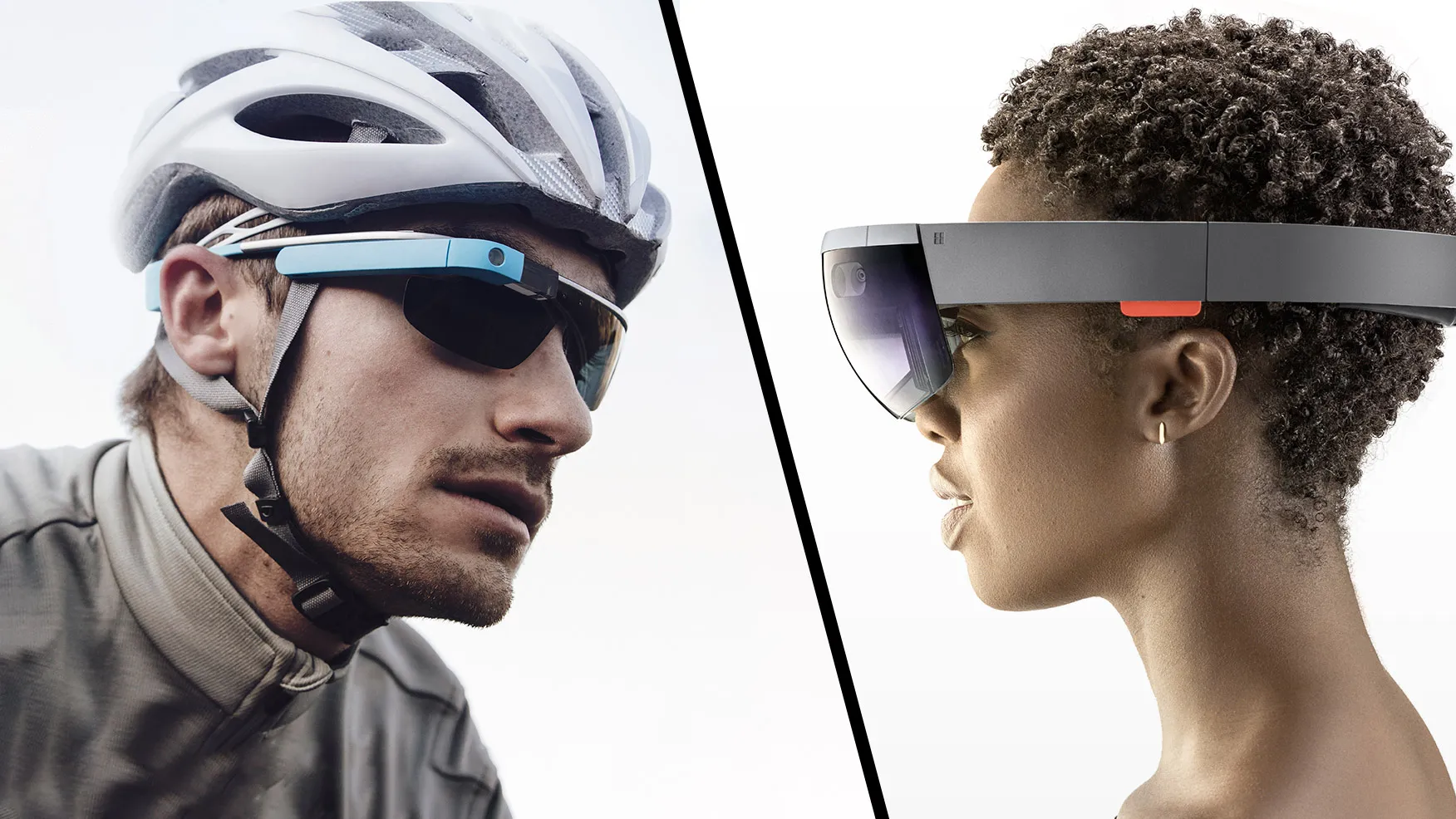
Augmented Reality and mixed reality technologies have evolved from experimental gadgets into essential tools for both workplace productivity and immersive entertainment. In 2025-2026, the landscape offers compelling options across multiple price points and use cases, from professional-grade enterprise solutions to consumer-friendly gaming headsets and practical smart glasses.
Professional and Enterprise AR Headsets
Varjo XR-4: The Enterprise Premium Standard
The Varjo XR-4 stands at the pinnacle of professional XR technology, setting the benchmark for high-resolution mixed reality applications. This device delivers industry-leading resolution with up to 70 pixels per degree (PPD), delivering true-to-life color accuracy that competitors struggle to match. Its enterprise-grade eye tracking and compatibility with professional design tools make it the preferred choice for demanding industries.
The XR-4 excels in applications including high-end design, medical simulation, and aviation training where visual precision is non-negotiable. While its premium positioning limits widespread adoption, organizations in architecture, automotive engineering, and healthcare recognize it as an essential investment for complex visualization tasks.
Magic Leap 2: Enterprise AR Specialist
The Magic Leap 2 focuses specifically on augmented reality for enterprise sectors, positioning itself as the go-to solution for healthcare, manufacturing, and remote assistance applications. Priced at approximately $3,299, it delivers advanced AR capabilities with improved hardware that provides clearer visuals and smoother AR overlays compared to its predecessor.
The device’s reduced weight compared to earlier iterations enhances usability in demanding work environments. Healthcare providers leveraging Magic Leap 2 for surgical guidance and manufacturing teams using it for equipment maintenance have reported significant efficiency improvements. However, the device’s limited VR capabilities restrict its versatility for organizations seeking mixed reality functionality.
HTC Vive Focus Vision and XR Elite
The HTC Vive Focus Vision represents a versatile midrange professional solution with 2880 x 2880 resolution per eye, delivering sharp visuals for professionals who prioritize mobility. Its inside-out tracking eliminates the need for external sensors, streamlining deployment in dynamic environments. The focus on training, collaboration, and enterprise applications makes it particularly suitable for workforce development programs.
The HTC Vive XR Elite offers a more compact design with 4K resolution and a modular setup, ideal for project reviews and remote collaboration. At approximately $1,099, it provides a more affordable professional option compared to the XR-4.
Microsoft HoloLens 2: A Declining Option
Microsoft has officially discontinued the HoloLens 2 as of October 2024, ending production after a three-year market run. While the company continues to provide critical security updates through December 31, 2027, the discontinuation marks Microsoft’s exit from consumer and general enterprise AR hardware. Existing customers should note that software support ends December 31, 2027.
This development reflects Microsoft’s strategic pivot toward cloud and AI technologies rather than hardware development. Organizations currently invested in HoloLens must evaluate alternatives, with Magic Leap 2, Varjo XR-4, and Meta’s emerging offerings providing viable replacement paths.
Advanced Consumer AR Smart Glasses
Meta Ray-Ban Display: The AR Display Breakthrough
In September 2025, Meta launched a revolutionary advancement in consumer AR with the Meta Ray-Ban Display, representing the first mainstream smart glasses with an integrated augmented reality display from a major brand. This device introduces a vibrant, sharp full-color display projected onto the interior of the right lens, positioned just below the eye line, capable of displaying text, images, and live video calls.
The display activates only during user interactions, remaining invisible to onlookers, with an LED indicator signaling camera usage to address privacy concerns. Available starting at $799, the Ray-Ban Display enables several transformative applications:
- Real-time translation and live captions for conversations, breaking language barriers in international work environments and travel situations
- Turn-by-turn pedestrian navigation with visual maps, currently launching in beta for select cities
- Visual responses from Meta AI, displaying step-by-step instructions, cooking guidance, and information about landmarks and artworks
- Private messaging display for WhatsApp, Messenger, and Instagram
- Live video calling with screen sharing capabilities
The glasses include a water-resistant bracelet with the Meta Neural Band, a novel surface electromyography (sEMG) wristband that interprets muscle signals from the wrist, enabling control through subtle hand gestures. The band weighs 42 grams, provides up to 18 hours of battery life, and features IPX7 water resistance. Users can navigate interfaces, scroll content, and interact with applications without touching the glasses through recognized hand gestures like pinches, swipes, taps, and rotations.
Battery life extends to six hours with mixed usage, with the included case providing an additional 30 hours of charge for extended use. The Ray-Ban Display will expand to the UK, France, Italy, and Canada in early 2026.
Meta also introduced the Oakley Meta Vanguard, a display-free sports-oriented variant featuring a wrap-around design with a central camera in the nose piece. Weighing 66 grams with replaceable nose pads and interchangeable lenses, these offer nine hours of battery life. Integration with Garmin sports watches enables athletes to request data such as speed, pace, heart rate, and distance during workouts, with automatic highlight reel creation from race and training events.
XREAL One and Air 2 Series: Immersive Personal Displays
The XREAL One represents a compelling option for professionals and gamers seeking high-resolution personal displays, priced at $499 for the standard version and $599 for the Pro model. These glasses deliver exceptional visual clarity through 0.68″ Micro OLED displays on the standard model and 0.55″ Micro OLED on the Pro, with an incredible 120Hz refresh rate and peak brightness of 600-700 nits providing excellent clarity even in well-lit environments.
The key differentiator is the flat-prism lens design that delivers a more subtle and natural appearance compared to standard triangular birdbath designs, earning a 5-star Eye Comfort rating from TÜV Rheinland. The display offers 50 degrees field of view on the standard model and 57 degrees on the Pro, with fully customizable screen distance, size, brightness, and color temperature.
The XREAL Air 2 occupies a different market position with a lower price point ($399) while maintaining impressive specifications: 1920 x 1080 resolution per eye, 500 nits of brightness, and a 120Hz refresh rate with 46-degree field of view. These glasses enable virtual screens up to 330 inches in size, making them particularly suitable for immersive collaboration. Available with prescription lens inserts and featuring swappable nose clips and soft arms, the Air 2 accommodates diverse comfort needs.
Both XREAL models connect via USB-C and operate without independent batteries, drawing power from connected devices. Global shipping commenced in 2025 with availability across the United States, UK, China, Italy, France, Germany, and Japan.
Vuzix M4000: Professional Field Service Specialist
The Vuzix M4000 stands as a purpose-built solution for industrial and field service applications, featuring robust IP67 certification for water and dust resistance with one-meter drop safety. Weighing 222 grams and offering up to 12 hours of runtime, it delivers an 854×480 resolution display with an impressive 28-degree field of view—among the largest available in monocular smart glasses.
The device incorporates an 8-core Snapdragon XR1 processor enabling onboard AI capabilities, 64GB storage, and 4K video recording at 30 frames per second. Its transparent waveguide display enables unobstructed views during work, critical for field service technicians performing equipment maintenance or installation tasks. This transparency advantage over competitors allows workers to focus on their actual task while viewing digital information without distraction.
The M4000 features a tilting display mechanism allowing adjustment without moving the entire device, integrated stereo speakers, voice control capabilities, and 3-degree head tracking. Its application in warehouse environments, including DHL’s deployment, demonstrated 25% efficiency improvements in picking operations.
Gaming and Entertainment VR Headsets
Meta Quest 3: The Gaming Leader
The Meta Quest 3 remains the most compelling VR headset for gaming and entertainment, combining affordability with impressive capabilities. Its pancake lenses deliver superior optics compared to Fresnel alternatives, providing enhanced sharpness and clarity during extended gaming sessions. The device features higher resolution panels with more than 4.5 million display pixels, supporting demanding visual content.
Core specifications include the Snapdragon XR2 Gen 2 processor, 8GB RAM, color passthrough cameras enabling mixed reality experiences, and full-color passthrough—a significant upgrade from competitors that offer black-and-white passthrough. The headset supports seamless multitasking with multiple app windows open simultaneously, creating a dynamic computing environment.
At approximately $499.99 for the 512GB model, the Quest 3 delivers a compelling value proposition. The 128GB model is available at approximately $420, though it’s being discontinued. Meta’s exclusive gaming library includes titles like Batman: Arkham Shadow, Half-Life: Alyx, and Beat Saber, providing immediate content availability for new users.
Meta Quest 3S: Budget Gaming Gateway
The Meta Quest 3S democratizes VR gaming at just $299 for the 128GB model and $399.99 for 256GB, making it the most affordable entry point into quality VR gaming. Despite its budget positioning, it shares the same Snapdragon XR2 Gen 2 processor and 8GB RAM as the Quest 3, delivering comparable processing power for demanding games.
The primary trade-offs are the adoption of Fresnel lenses rather than pancake lenses, reduced display resolution (1832 x 1920 per eye versus 2064 x 2208 on the Quest 3), and lower overall pixel count (3.5 million versus 4.5 million). However, this lower resolution can actually result in better performance for demanding applications, reducing latency through decreased computational overhead.
The Meta Quest 3S retains full-color mixed reality capabilities with its 4MP color passthrough camera and features a new IR flood sensor that enhances hand tracking accuracy in dark environments—a critical feature for immersive gaming. Battery life extends to 2.5 hours of continuous use.
Sony PlayStation VR2: Console-Tethered Power
For gamers with access to PlayStation 5 consoles, the PlayStation VR2 represents cutting-edge immersive gaming. While tethered to console hardware, this positioning eliminates battery concerns and enables substantially more demanding graphics and physics simulations than standalone alternatives.
The platform’s exclusive titles, including full-featured sequels to popular franchises, provide gaming experiences unavailable on other platforms. The investment in console infrastructure offsets the lack of portability for dedicated gaming enthusiasts.
Apple Vision Pro: Premium Creative Content
Apple’s Vision Pro, priced at $3,499, appeals to creative professionals and media production specialists rather than casual gamers. The device delivers ultra-high-resolution displays at 4,000 x 4,000 per eye, powered by the M2 chip, providing exceptional visual fidelity. Its seamless ecosystem integration with Mac, iPad, and iPhone makes it particularly valuable for architects, designers, and video editors seeking to integrate XR into existing creative workflows.
However, the substantial weight and premium pricing limit mainstream gaming adoption. For casual entertainment consumers, Meta Quest alternatives offer dramatically better value propositions.
Emerging Solutions and 2026-2027 Outlook
Apple’s Smart Glasses Strategy: 2026-2027
Apple is reportedly scrapping earlier plans for a Vision Air headset in favor of developing consumer-focused smart glasses, with announcements expected in 2026. These glasses will prioritize lightweight design, affordable pricing, and AI integration—addressing the market’s actual needs.
Early specifications suggest a Ray-Ban-like design without transparent AR displays, focusing on practical functionality. Expected features include real-time language translation, contextual notifications, hands-free navigation, and enhanced accessibility tools. The glasses will feature cameras for video capture and environmental sensing, alongside audio systems for playback and spatial sound.
Apple is developing custom low-power silicon based on the energy-efficient architecture of the Apple Watch, enabling multiple cameras and camera-side AI processing while preserving all-day battery life. Mass production of these “Ray-Ban-like” glasses is expected to commence in the second quarter of 2027, with Apple projecting 3-5 million unit shipments that year.
The roadmap extends beyond 2027, with extended reality glasses featuring built-in color see-through displays expected in 2028, supporting waveguide technology for true augmented reality experiences.
Workplace Productivity Transformation
The convergence of AI and passive AR technology is creating what industry observers call the “invisible revolution” in workplace productivity. Smart glasses equipped with contextual awareness monitor environments and surface relevant information precisely when needed, eliminating the cognitive overhead of traditional productivity tools.
In manufacturing environments, field service engineers approaching equipment can have smart glasses instantly identify the equipment model, display service history, and highlight probable failure causes through computer vision—all without requesting information. Healthcare workers benefit from passive AI surfacing critical information like medication allergies and recent test results at precisely the moment of patient interaction.
Early deployments report qualitative improvements that traditional metrics struggle to capture. Employees describe feeling more present, less overwhelmed by information management, and more confident handling complex tasks. At DHL warehouses, Vuzix deployments boosted picking efficiency by 25%. Field service companies report 30-40% improvements in average repair times when technicians can share what they see rather than describe it to remote supervisors.
Comparative Analysis: Work vs. Entertainment
| Use Case | Recommended Device | Key Advantage | Price Point |
|---|---|---|---|
| Professional Design/Engineering | Varjo XR-4 | 70 PPD resolution, enterprise-grade eye tracking | $10,000+ |
| Industrial Field Service | Vuzix M4000 | IP67 durability, transparent display, long runtime | ~$2,500 |
| Enterprise AR (Healthcare/Manufacturing) | Magic Leap 2 | Advanced AR focus, reduced weight | $3,299 |
| Consumer AR Smart Glasses | Meta Ray-Ban Display | AR display, AI integration, ecosystem | $799 |
| Personal Display/Productivity | XREAL One | High refresh rate, excellent optics, affordable | $499-599 |
| Casual Gaming | Meta Quest 3S | Budget entry point, full-color MR | $299-399 |
| Premium Gaming | Meta Quest 3 | Superior optics, largest game library | $499+ |
| Immersive Gaming | PlayStation VR2 | Top-tier graphics with console power | $549 |
Practical Guidance for Selection
For Enterprise Organizations: The discontinuation of HoloLens 2 forces strategic decisions. Organizations prioritizing AR for field service should evaluate Vuzix M4000’s proven industrial credentials. Companies requiring high-fidelity design visualization should consider Varjo XR-4 despite its premium pricing. Magic Leap 2 remains viable for healthcare and specialized manufacturing applications with strong AR requirements.
For Consumer Productivity: The Meta Ray-Ban Display represents a watershed moment for consumer AR, finally delivering practical augmented reality functionality at mainstream price points. The combination of real-time translation, navigation, and AI integration addresses genuine consumer needs. For those primarily seeking enhanced personal workspace capabilities, XREAL One delivers superior optics at roughly 60% of Vision Pro’s cost.
For Gaming Enthusiasts: The Meta Quest 3S establishes a compelling new baseline for accessible gaming at $299. For those seeking the highest fidelity, the Quest 3 at $499 remains the value leader. PlayStation VR2 caters to console gamers unwilling to compromise on graphics quality.
For Fieldwork and Logistics: Vuzix M4000’s combination of durability, transparency, and performance makes it the field service standard. Organizations implementing large-scale deployments should consider the ecosystem benefits of established software partnerships and proven ROI documentation.
Market Trajectory and Investment Considerations
The AR/VR headset market size was estimated at $12.46 billion in 2024, with projections to reach $16.9 billion in 2025. Long-term forecasts suggest market expansion exceeding $260 billion by 2034, driven by advancing hardware capabilities and expanding application ecosystems.
The successful launches of Meta Quest 3, PlayStation VR2, and Apple Vision Pro have accelerated interest in immersive technologies. Independent developers now have access to affordable development tools including Unreal Engine and Unity with dedicated AR/VR development kits, expanding the application ecosystem beyond corporate uses.
By 2026-2027, the convergence of AI with AR/VR hardware promises to transform how people work, communicate, and entertain themselves. The critical question for potential buyers is no longer whether to invest in these technologies, but which form factor and use case best aligns with their specific requirements and budget constraints.