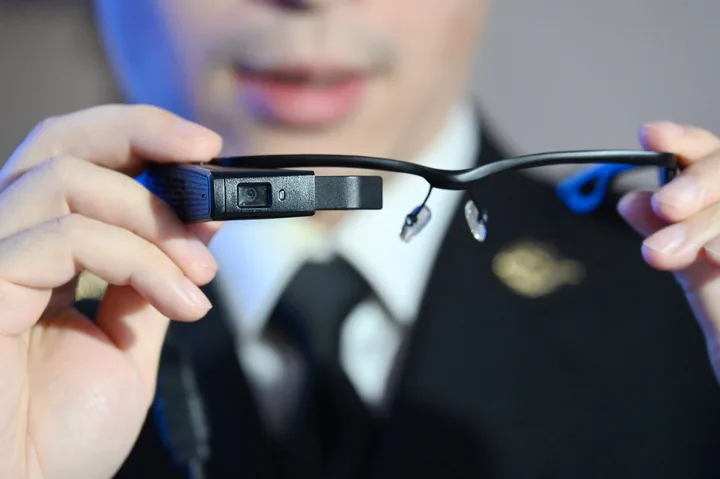
The question of whether augmented and virtual reality will replace video calls represents a fundamental misframing of technological evolution. Rather than outright replacement, AR and spatial computing are creating complementary modalities that coexist with traditional video calls, each optimized for specific use cases. By 2026, immersive collaboration technologies are establishing themselves as essential infrastructure for organizations seeking competitive advantage in hybrid and remote work environments, though video calls will remain viable for simpler interactions where immersive capabilities add minimal value.
The Evidence of AR/VR Impact on Remote Collaboration
Quantified Improvements in Meeting Effectiveness
The most compelling evidence for immersive collaboration comes from early adopter organizations documenting measurable improvements. Google’s Beam project, testing AR-enhanced video calls, reported remarkable results:
- 31% reduction in video-meeting fatigue
- 12% faster reaction time post-meeting
- 40% more hand gestures and non-verbal cues
- 28% better recall of content
These metrics address fundamental weaknesses in traditional video calls. For 71% of workers, traditional video calls feel unproductive, lacking the shared context and coworking capabilities necessary for complex collaboration. AR conferencing technologies directly address these limitations by incorporating digital overlays, virtual elements, and shared context enabling richer interaction.
Beyond meeting satisfaction, spatial computing drives measurable decision-making improvements. Organizations report up to 30% reduction in decision-making time and 20% increase in idea generation during collaborative sessions. These productivity metrics translate directly to business value, with XR in business reducing operational costs and boosting productivity by 10-20%.
Consumer Adoption and Platform Momentum
Enterprise adoption of spatial computing collaboration tools is accelerating. Microsoft Mesh, now generally available in Teams, enables 3D immersive experiences accessible from PCs and Meta Quest VR devices. Early customers including Takeda, Accenture, bp, and Mercy Ships are benefiting from Mesh’s spatial audio and immersive spaces.
Meta’s Horizon Workrooms and Spatial (built on spatial computing infrastructure) demonstrate comparable platform momentum. Research from Quocirca indicates that 68% of UK IT decision-makers believe VR and AR will be mainstream in the workplace within two years. Current organizational usage reflects this trajectory: 26% are using immersive technology for virtual collaboration, while 36% leverage VR for remote training and 35% for remote service.
Hardware Accessibility and Cost Democratization
The historical barrier limiting AR/VR workplace adoption—prohibitive hardware costs—is dissolving. The Meta Quest 3S at just $299 delivers exceptional performance for enterprise environments while maintaining affordability enabling large-scale deployments. For organizations hesitant about VR’s value, the affordable entry point reduces investment risk while enabling proof-of-concept pilots.
Higher-end options accommodate diverse organizational requirements. The HTC Vive Focus Vision at $999-$1,200 balances premium features with enterprise scalability. For specialized applications, the Siemens SRH-S1 at $1,500-$2,000 provides vertical-specific capabilities. Even Apple’s Vision Pro, despite its $3,499 price point, attracts segments willing to invest in premium experiences.
This tiered hardware landscape enables organizations to select tools aligned with use cases and budgets rather than forcing binary all-or-nothing decisions. Frontline training justifies $299 hardware investment. Complex collaborative design work might warrant $1,200 device investment. Mission-critical applications might allocate $3,500 for premium experiences.
The Real Competitive Advantage: Nuance Preservation and Presence Replication
Bridging the Embodiment Gap
Traditional video calls present heads floating in boxes—deliberately removing the embodied, spatial context making in-person interaction rich and informative. Spatial computing restores this embodiment through realistic avatars capturing facial expressions and body language. This embodiment restoration matters profoundly: when remote participants can see colleagues’ expressions, body language, and spatial relationships, communication richness approaches physical presence.
Research on workplace presence confirms this impact. VR’s immersive qualities heighten participants’ awareness of one another, fostering connections rivaling in-person interactions. Unlike video calls where attention constantly shifts between faces and shared content, immersive spaces anchor participants’ focus within unified environments where physical presence and digital content coexist.
Shared 3D Context and Collaborative Problem-Solving
The most significant advantage spatial computing provides is shared 3D context—something fundamentally impossible within traditional video calls. Teams can collaborate on three-dimensional models, manipulating them together in real-time as if working in the same physical space. A design team can explore a 3D CAD model together, rotating, zooming, and annotating while discussing specifications. Rather than describing what they see, team members work with identical visual reference, eliminating ambiguity.
This capability transforms decision-making velocity. When engineers can walk through facility designs together, identifying spatial conflicts before construction begins, project timelines compress. When product designers can jointly explore prototypes while brainstorming, iteration cycles accelerate. When training simulations enable hands-on practice in realistic environments, competency development accelerates.
Critical Limitation: The Technology Gap and Real-World Friction
Despite compelling advantages, substantial barriers prevent immediate replacement of video calls with immersive alternatives.
Meeting Equity and Hybrid Configuration Challenges
The critical challenge plaguing hybrid meetings is “meeting equity”—ensuring remote participants experience parity with in-office attendees. Too often, in-office participants cluster around conference room tables while remote participants appear in boxes on screens, fundamentally disadvantaging remote attendees who struggle to hear conversations, read body language, and maintain engagement.
Immersive technologies promise to address this through shared virtual spaces where all participants—regardless of location—interact with identical context. However, implementing this requires organizational commitment to full adoption. Mixed deployments where some participants use VR while others use traditional video calls recreate equity problems in new forms. The fully immersive solution only works when organizations standardize on spatial computing across distributed teams.
User Friction and Accessibility Barriers
Despite hardware cost reduction, adoption friction persists. A shocking 77% of workers have tried setting up video technology for meetings but gave up because it was too difficult. This setup friction undermines collaboration that remote work depends on. Immersive technologies add complexity: headset setup, account configuration, and troubleshooting require technical expertise and patience many workers lack.
Physical accessibility concerns compound these challenges. Extended headset usage causes eye strain, motion sickness, and discomfort. For workers with disabilities, spatial computing interfaces may prove inaccessible. Rather than replacing video calls universally, AR/VR will likely become specialized tools for specific use cases where immersive benefits justify the friction cost.
Cognitive Overload and “Zoom Fatigue” Persistence
While spatial computing reduces meeting fatigue compared to traditional video calls, it doesn’t eliminate it. Participants report that excessive virtual meetings develop “Zoom fatigue,” dampening spirits and productivity. Early indications suggest immersive meetings create less fatigue than traditional video calls, but extended immersive sessions still produce cognitive strain.
Additionally, organizations must avoid replacing simple video calls with immersive experiences. A brief project status update may not justify spatial computing overhead. Quick conversations better served by simpler modalities will remain optimal in video calls, even as strategic meetings and complex collaboration migrate to immersive platforms.
The Emerging Multi-Modal Future: Coexistence Rather Than Replacement
Strategic Use Case Differentiation
The evidence increasingly points toward coexistence rather than replacement. Video calls remain optimal for:
- Quick status updates and brief announcements
- Simple one-on-one conversations
- Interviews and external meetings
- Accessibility scenarios where spatial computing creates barriers
Immersive collaboration becomes essential for:
- Complex design reviews and spatial decision-making
- Global team brainstorming and ideation
- Hands-on training and skill development
- Collaborative problem-solving requiring 3D context
This differentiation reflects rational tool selection. Just as organizations maintain telephone, email, and video conferencing simultaneously rather than replacing each with the next technology, they will maintain video calls as a foundational tool while adding spatial computing for high-value collaborative scenarios.
Hybrid Participation and Cross-Device Collaboration
The future of workplace collaboration involves seamless hybrid participation—with some team members using spatial computing headsets, others joining via video call interface, and still others using smartphone AR. This cross-device collaboration requires platforms supporting diverse participation modalities simultaneously.
Organizations making this transition successfully will implement it gradually. Rather than mandating immediate headset adoption, they deploy immersive capabilities for voluntary adoption among early-adopter teams. As initial teams demonstrate productivity improvements and refined practices, broader adoption becomes less disruptive.
Organizational Prerequisites for Successful Adoption
Beyond Technology: Culture and Change Management
Organizations seeking to leverage spatial computing for remote collaboration must recognize that technology represents less than half of the adoption challenge. Microsoft’s Work Trend Index reports that 43% of leaders identify relationship building as the greatest challenge in remote and hybrid work. Technology cannot solve cultural and organizational challenges—it can only enable solutions leaders must architect through deliberate change management.
Successful implementations include:
- Clear communication about why immersive collaboration matters and how it improves workflows
- Voluntary initial adoption rather than mandated deployment
- Training and support ensuring employees become proficient before expectation of regular use
- Iterative refinement based on early adopter feedback
- Dedicated technical support addressing inevitable setup friction
Infrastructure and Technical Preparation
Successful deployments require robust infrastructure supporting immersive experiences. High-bandwidth connectivity, modern device management systems, and adequate IT support represent foundational requirements. Organizations managing large distributions must implement mobile device management (MDM) systems enabling secure, scalable headset deployment.
Security and data privacy demand particular attention. Data protection regulations require organizations to safeguard information about user activity, avatar customization, and meeting content within immersive spaces. Compliance frameworks ensuring GDPR and other privacy obligations must be established before broad deployment.
Market Projections and 2026-2027 Outlook
Mainstream Adoption Accelerating
The trajectory toward mainstream spatial computing adoption is clear and accelerating. Research indicates that XR in collaboration has established itself as “a necessity rather than an experiment” in 2026. Remote work normalization combined with improved hardware accessibility and platform maturity is driving organizational adoption beyond early adopters.
Organizations across industries are piloting spatial computing deployments:
- Pharmaceutical (Takeda): Using Microsoft Mesh for distributed team collaboration and training
- Professional Services (Accenture): Leveraging immersive workspaces for complex project collaboration
- Oil & Gas (bp): Deploying spatial computing for remote operations and training
- NGOs (Mercy Ships): Using immersive platforms for distributed team collaboration
Generation Z Driving Adoption
Demographic shifts will accelerate adoption. Generation Z employees, for whom VR gaming and immersive experiences are familiar, will drive workplace adoption as they enter organizations in larger numbers. Rather than requiring extensive training or change management, Gen Z will expect immersive capabilities as standard workplace infrastructure.
Integration with AI and Ambient Intelligence
By 2027, AI integration will enhance spatial computing through intelligent agents providing real-time support. Virtual assistants will surface relevant data, schedule follow-up tasks, transcribe discussions, and provide contextual intelligence without requiring explicit user requests. This AI-AR convergence will transform immersive collaboration from passive tool into intelligent partner augmenting human creativity and decision-making.
Persistent Virtual Workspaces
Emerging capabilities including persistent virtual offices—remaining online 24 hours enabling teams to leave work in progress and resume exactly where they left off—will transform how distributed teams maintain context and continuity. Rather than starting each meeting from scratch, teams will work within continuous virtual environments accumulating artifacts and maintaining persistent shared context.
Comparative Analysis: Video Calls vs. Spatial Computing
| Factor | Video Calls | Spatial Computing | Advantage |
|---|---|---|---|
| Setup Complexity | Low | High | Video calls (simpler) |
| Physical Accessibility | High | Moderate | Video calls (fewer barriers) |
| Meeting Fatigue | Moderate-High | Low-Moderate | Spatial computing |
| Content Collaboration (2D) | Good | Excellent | Spatial computing |
| 3D/Spatial Collaboration | Poor | Excellent | Spatial computing |
| Cost per Participant | Minimal (software) | $300-3,500 (hardware) | Video calls (lower) |
| Setup Time | < 1 minute | 5-10 minutes | Video calls (faster) |
| Non-verbal Communication | Moderate | High | Spatial computing |
| Embodied Presence | Low | High | Spatial computing |
| Use Case Breadth | Very broad | Specialized | Video calls (broader) |
Practical Implementation Roadmap for Organizations
Phase 1: Pilot (Months 1-3)
Organizations should deploy immersive collaboration pilots with willing teams. Select use cases where spatial computing provides clear benefits (complex design reviews, distributed training) and measure outcomes rigorously.
Phase 2: Refinement (Months 4-6)
Based on pilot learning, refine deployment approach. Identify which use cases benefit most from immersive capabilities versus those adequately served by simpler modalities. Build organizational competency and confidence.
Phase 3: Strategic Expansion (Months 7-12)
Expand deployment to additional teams and use cases. Establish hybrid participation supporting simultaneous video call and immersive participants. Continue cultural change management addressing adoption resistance.
Phase 4: Integration (Ongoing)
Integrate spatial computing into core collaborative workflows. Maintain video calls for appropriate use cases while leveraging immersive technology strategically.
Augmented and virtual reality will not replace video calls wholesale. Instead, they represent a complementary modality optimizing specific collaboration scenarios—particularly complex spatial problem-solving, global team collaboration, and hands-on training—where immersive benefits justify the setup complexity and hardware investment.
The more accurate framing asks: “How will organizations optimize their collaboration technology mix?” Rather than replacement, the future involves sophisticated tool selection, matching collaboration modality to specific use cases and participants. Video calls remain essential for quick interactions and accessibility-critical scenarios. Spatial computing becomes standard for complex collaborative work requiring shared 3D context and embodied presence.
By 2027, successful remote organizations will deploy both modalities seamlessly, enabling participants to choose tools appropriate to their specific collaboration needs. The competitive advantage belongs to organizations that navigate this transition thoughtfully—implementing spatial computing strategically for high-value use cases while maintaining simplicity and accessibility for routine collaboration.
The future of remote work is neither “all video calls” nor “all immersive technology,” but rather intelligent coexistence optimizing human collaboration across diverse work scenarios.